2026 Year-End Review
2026 Research Summary: Conferences and New Changes.

November 9, Austin, CoRL. Jim Fan opened the talk that launched GR00T 2 by saying that the release of GPT-6 Astra two months earlier had put roboticists through the “five stages of grief” 1. That same day Anthropic released Fable 5.2, which scores 64.9% on RoboDojo and can also control a robot to solve a Rubik’s Cube 2.
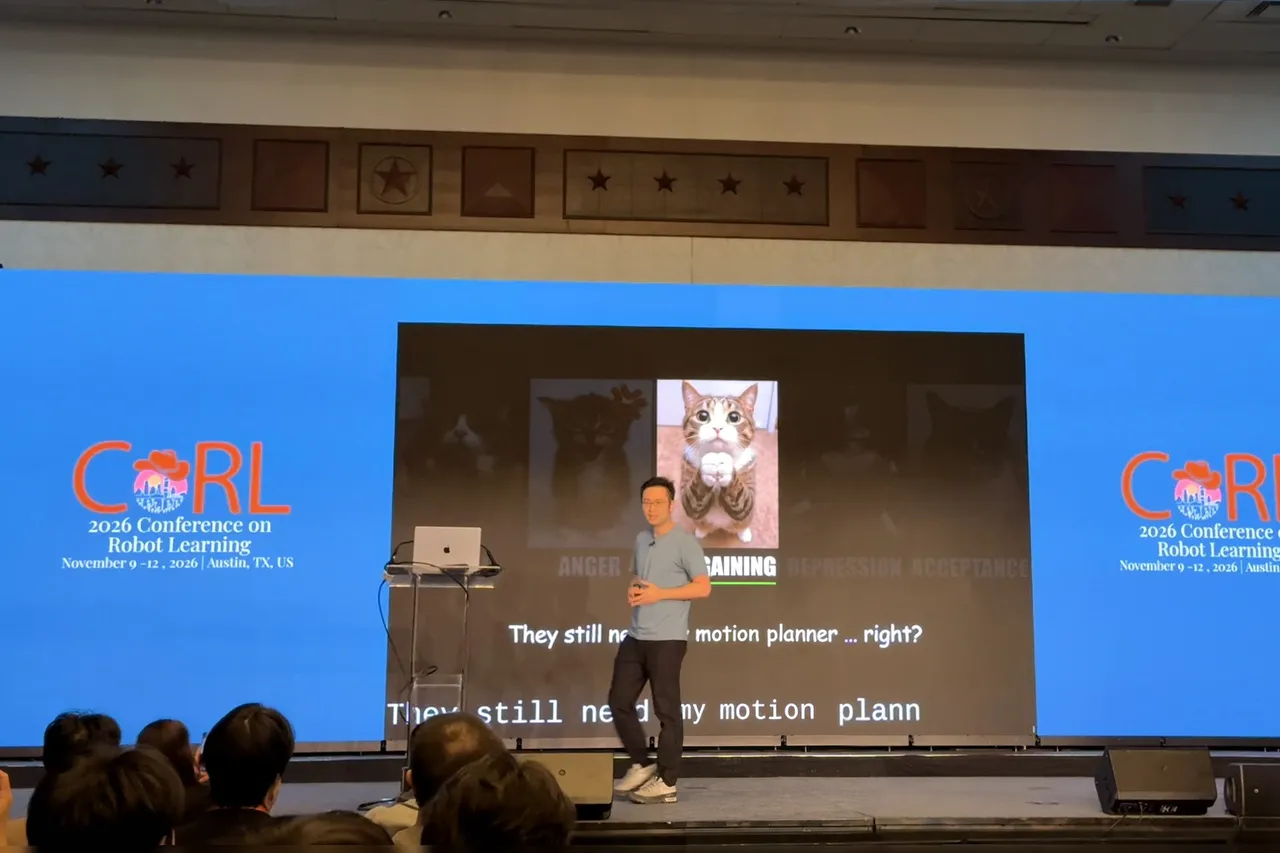
The five stages of grief on screen
Three days later, at the same conference, I was due to talk about how to make a dexterous hand solve a Rubik’s Cube 3. (Yes, OpenAI did cube solving long ago 4 :) )
I have wanted to write a year-end review ever since I started this blog. This year, technology exceeded my expectations at every moment; my expectations are like the tangent line of a convex function, never able to catch up with the world. So I figured it was time to write down some feelings that kept coming back this year, and I suspect people doing research have felt something similar.
My Research

FAH, UC San Diego
This year my work went from human demonstrations to in-hand reorientation and tool use, and then to solving a Rubik’s Cube, in both physics simulation and the real world. I am trying to do the locomotion of manipulation: it comes down to changing contacts, which is low-level control, a system 0 problem.
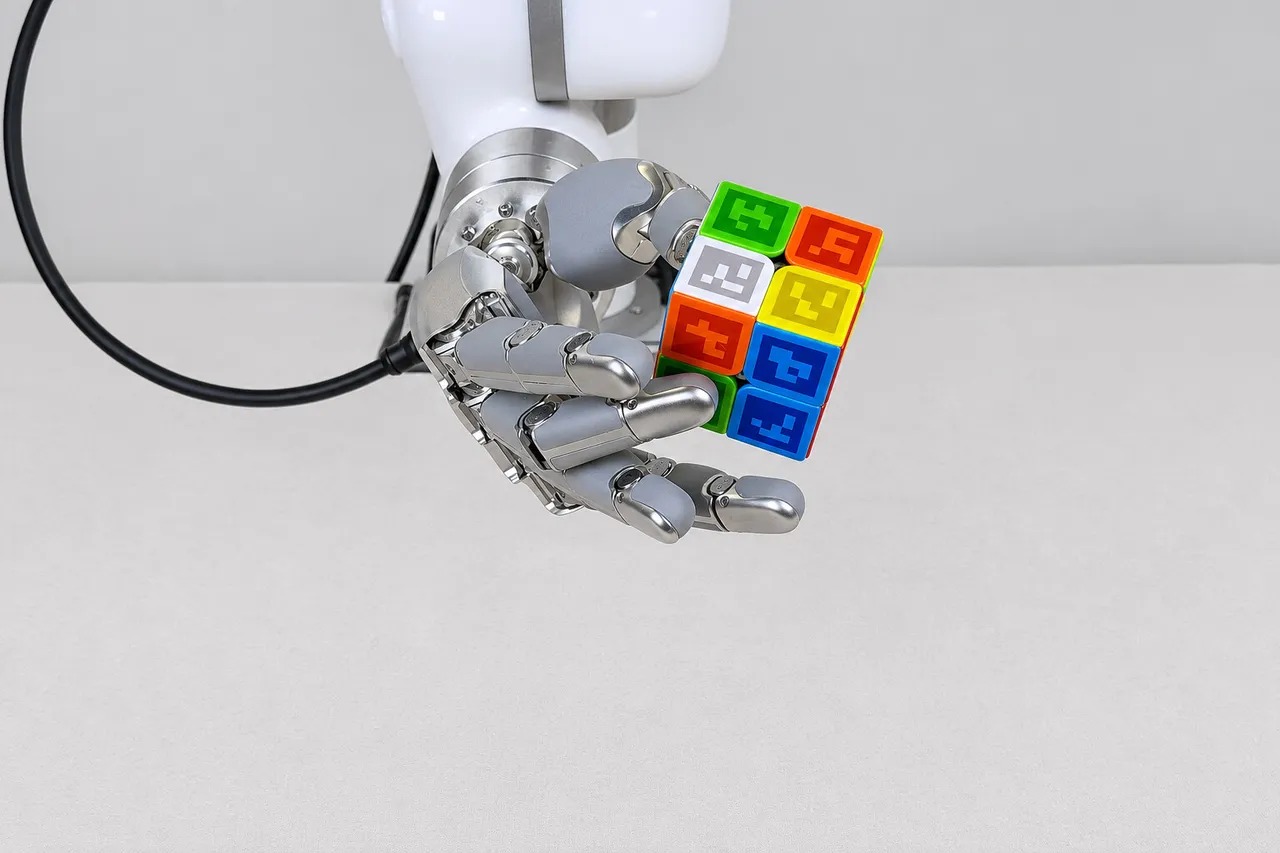
A summer spent solving a Rubik’s Cube
Robotics deals with the physical world, and the hardest part of the physical world is contact. Contact is discrete and discontinuous, so dexterity on a real robot is a contact problem. With real hardware, building the infra and getting those contacts to work takes a month or so. By then there’s often a new generation of models out. So every time I see a new release, my first reaction is to look for the task I am working on. If it isn’t there, I breathe a sigh of relief. If it is, you get the scene at the top of this post (and, before my own release, every time I saw a cube-solving demo; that’s how afraid I am of being scooped).
Going to Conferences
I went to four conferences this year, two before the Astra release and two after.
CVPR, Denver, June
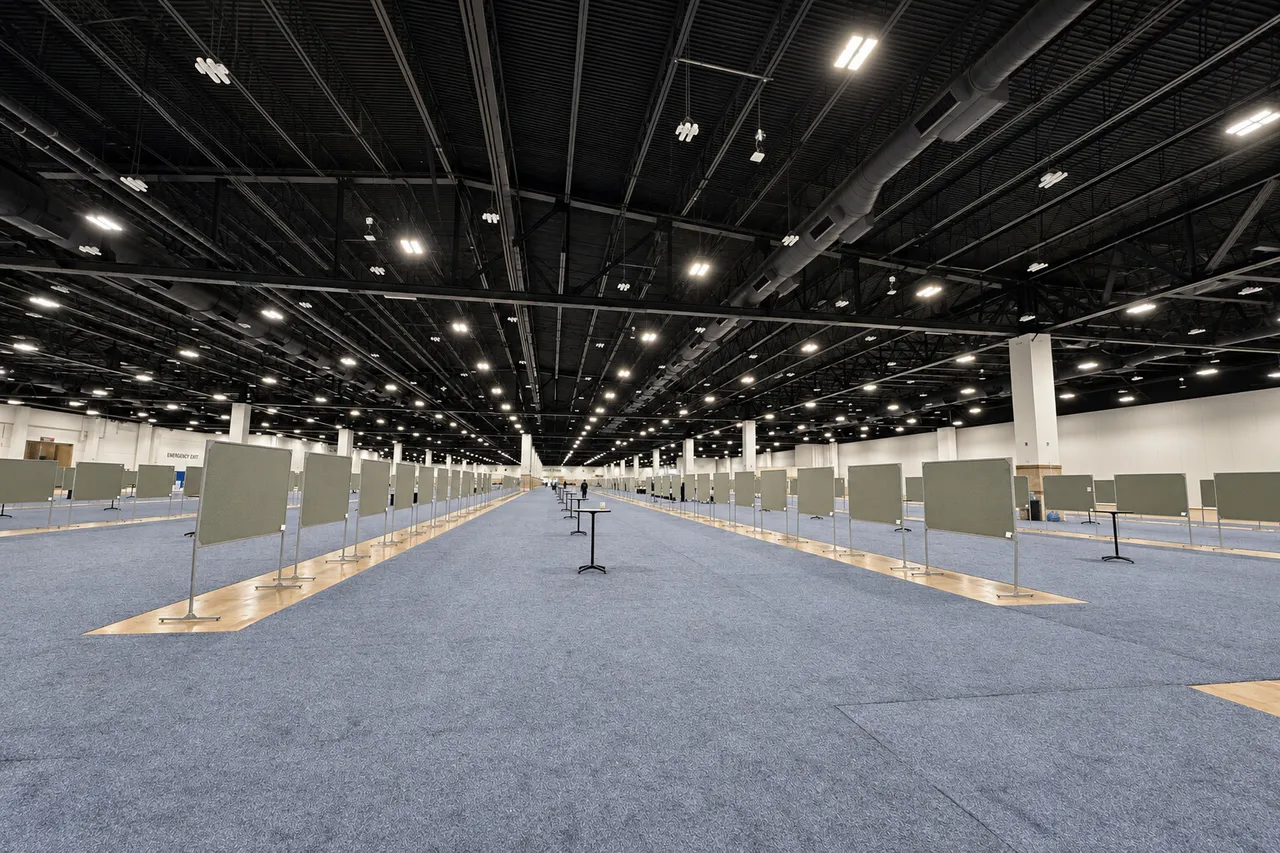
The poster hall before opening
In Denver in June, the exhibit hall was row after row of posters and demos. People were debating VLA versus WAM (world action model) 5, the data pyramid 6, the data flywheel… Letting a general-purpose language model control a robot directly was still a weekend side project back then, and it sounded like you didn’t understand our robotics at all and were just messing around!
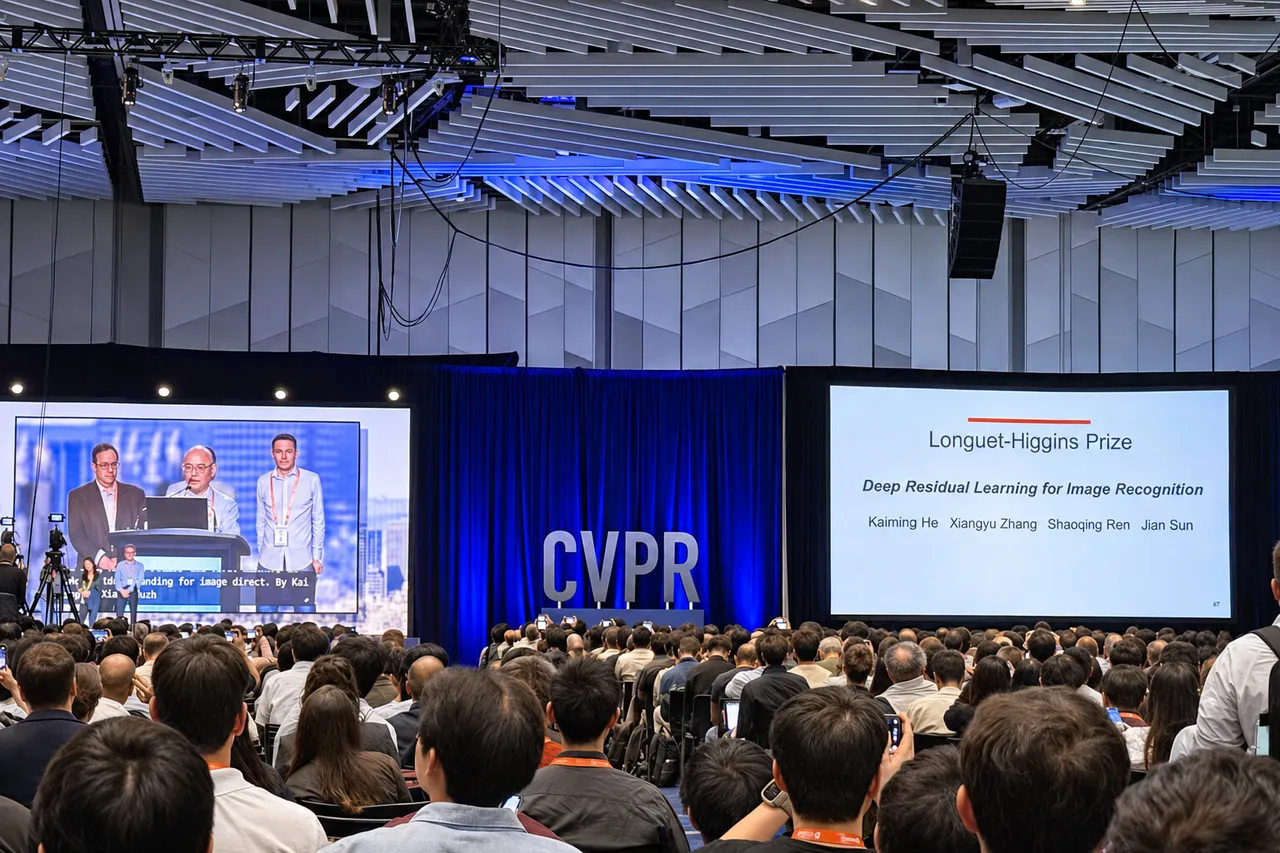
The Longuet-Higgins Prize (Test of Time) went to ResNet
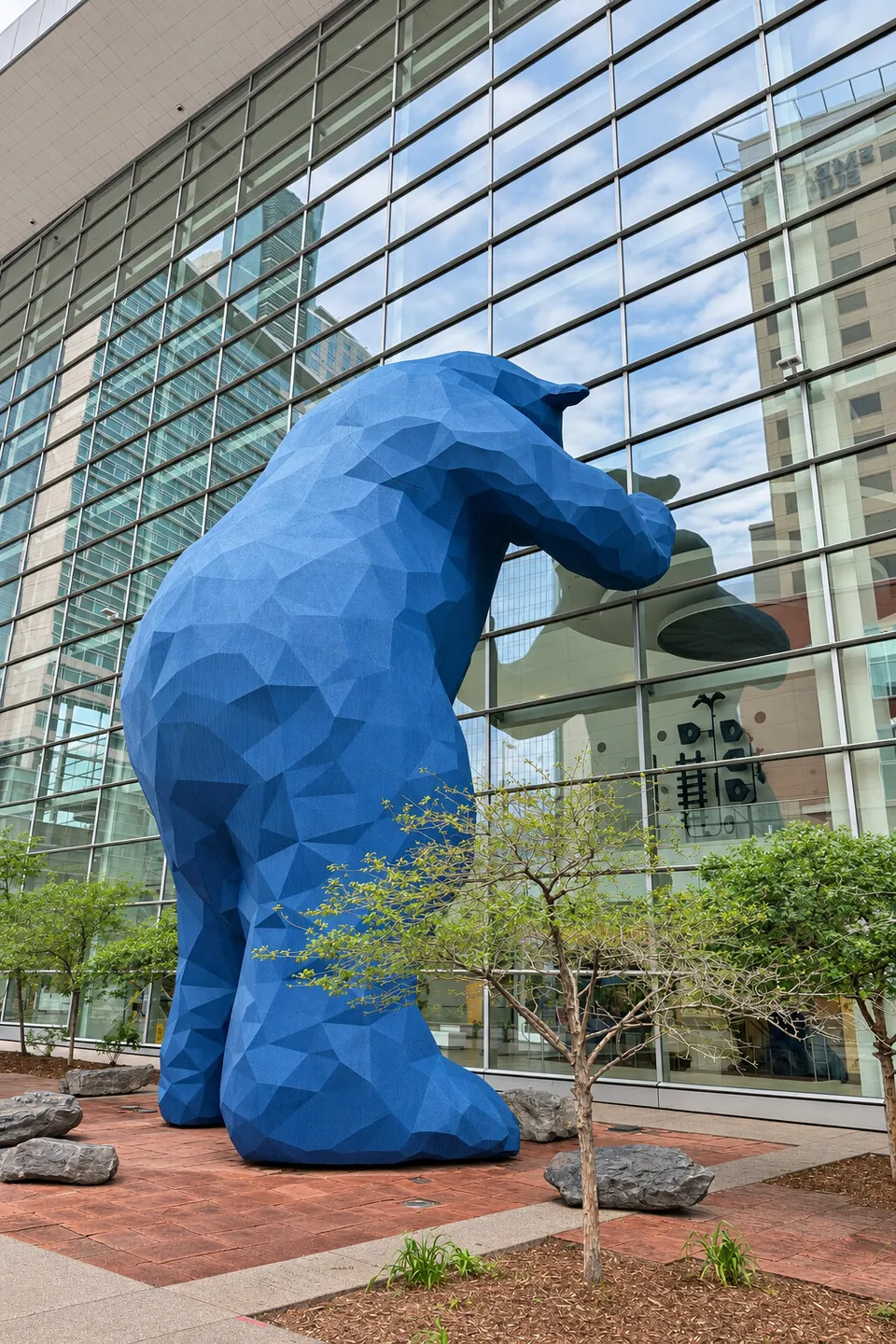
The blue bear outside the venue
SIGGRAPH, Los Angeles, July
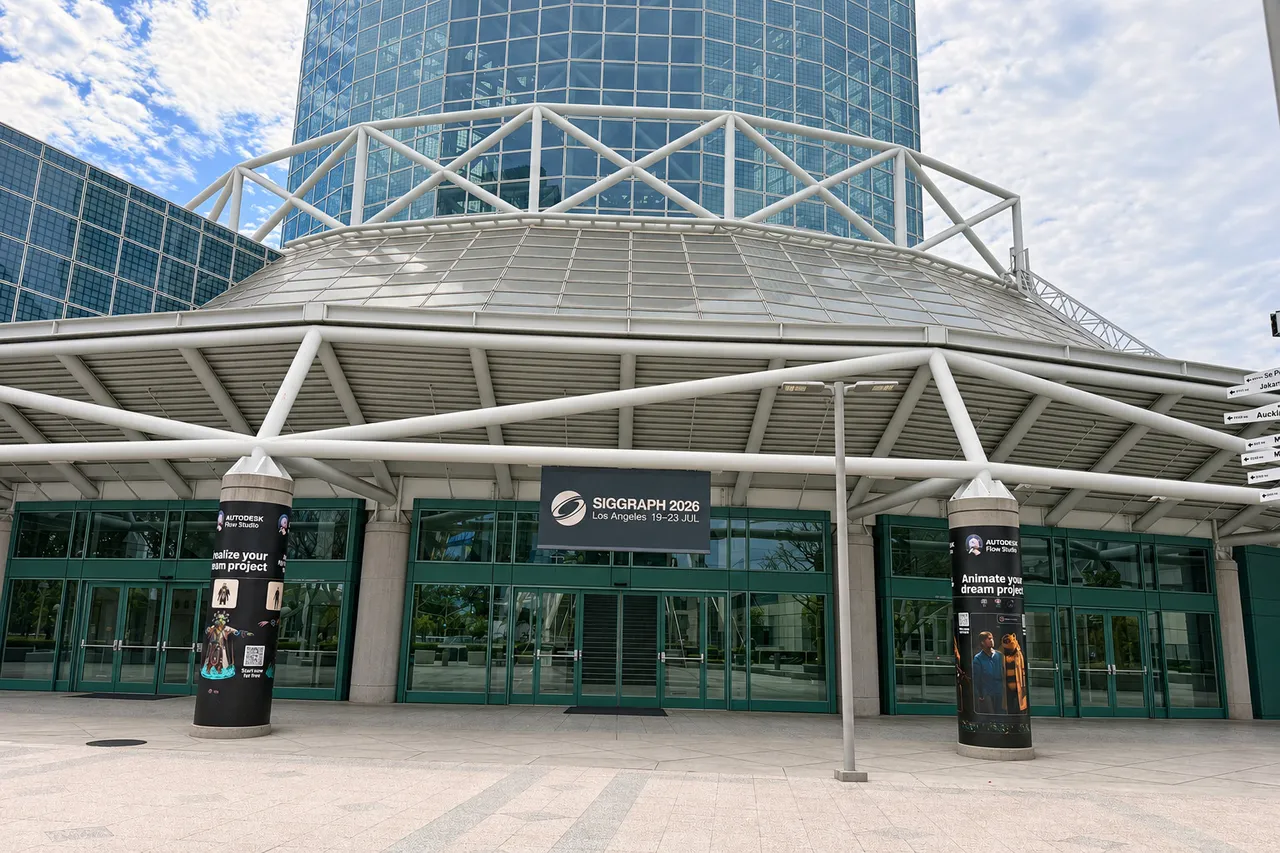
Los Angeles Convention Center
I went to Los Angeles in July without a paper, just to have fun and learn from others. I started doing research in a graphics lab as an undergrad, so this trip fulfilled an old wish. And then I found “AI Physics” 7 on the big screen of the NVIDIA keynote: graphics people study the physical world too, the same problem robotics cares about. I hope we get accurate physics simulators that make sysID easier 8!
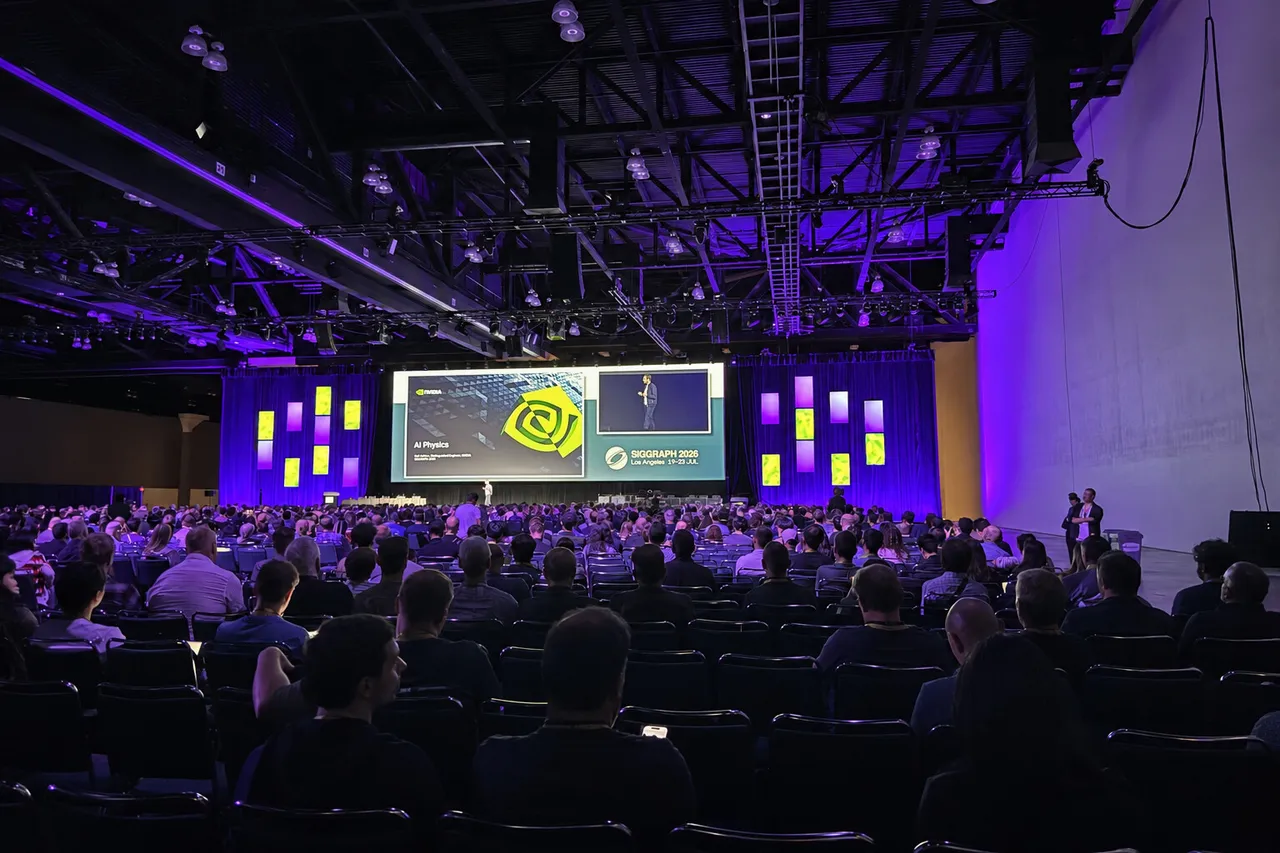
AI Physics

Sunset in Los Angeles
IROS, Pittsburgh, September

Nice weather in Pittsburgh!
In Pittsburgh at the end of September, Astra had only just been released, but Twitter/X was already flooded with all kinds of fancy demos in physics simulation, plus some real-robot gripper demos 9. I released the project from the top of this post after those fancy demos, at a bad time: everyone was already desensitized and felt nothing about it. Still, at that point I felt there was too much hype and too little respect for robotics. Letting Astra control a walking robot 10, for example: wouldn’t that just blow up?
Guanya ran a poll at the Wuji banquet: on the impact of frontier models like Astra on robotics, which camp are you in? First place went to the Toolists: agents cannot directly solve the core problems of robotics, but they are great tools. Next came the Redemptionists, the Resisters, the Adventists, and the indifferent 11. I think a little professional pride helped the Toolists win. Robotics people see what LLMs can do, but we still want to keep directing the AI ourselves. Models can now do more and more, even solve a Rubik’s Cube zero-shot on a real robot. If Guanya ran the poll again today, I bet there would be quite a few more Adventists. Guanya also said he would ask the same question at a learning conference, where the answer might be different. Everyone laughed.
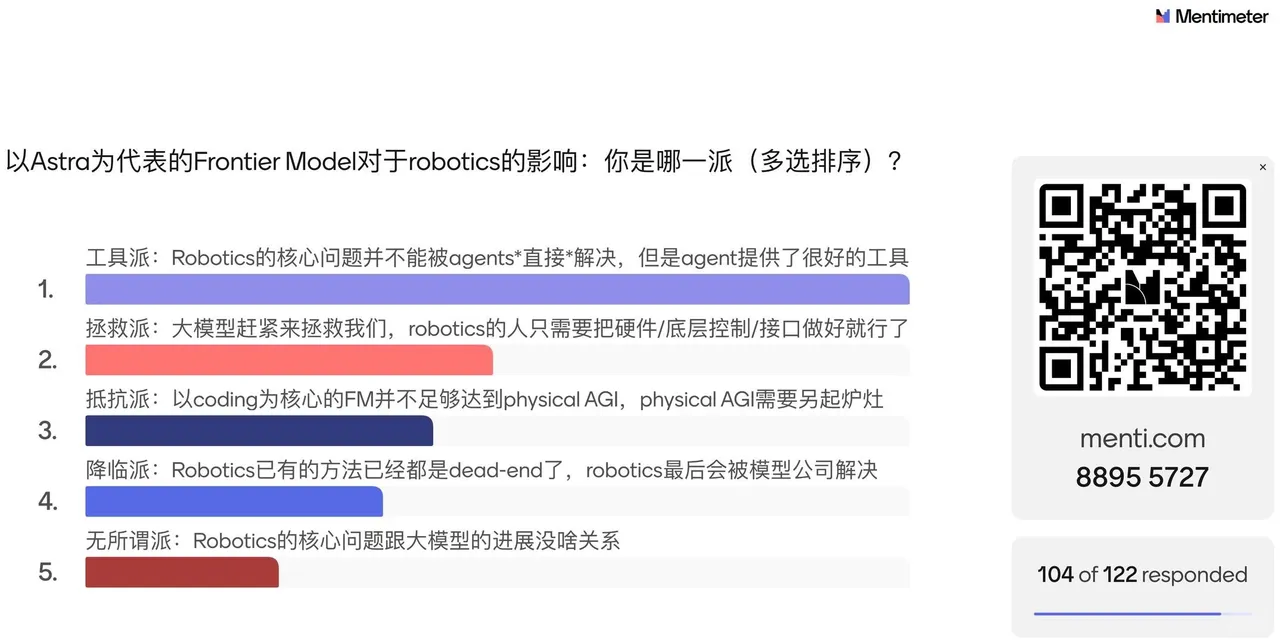
The poll at the banquet
CoRL, Austin, November
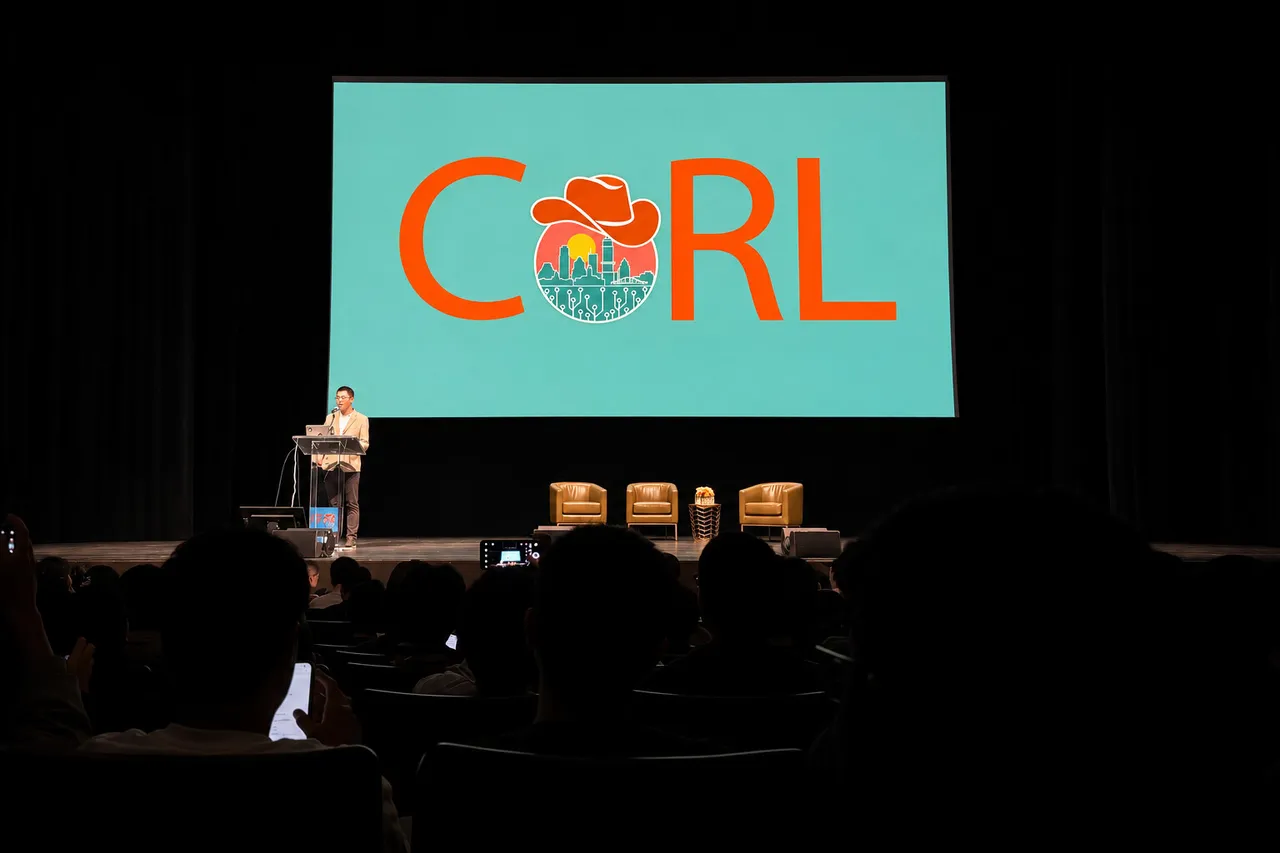
CoRL 2026, Austin
Austin in November is the scene at the top of this post. The same week, Fortune reported that OpenAI had disbanded its stand-alone robotics team, on the grounds that general-purpose models can now be used on robots directly; at the venue, booth 208, registered under OpenAI’s name, stood empty 12. Does that confirm the news?
On a workshop slide, Guanya flipped the question people have been asking for years: “ChatGPT Moment for Robotics? Robotics Moment for GPT!” 13
I presented my work, but my flight home was cancelled, and it took quite some effort to get back to San Diego. So it looks like GPT still has a road ahead, a very long one by human standards, before it can solve complex social problems.

Austin at night
What Changed
Agentic Robotics
What is new this year is that LLMs started solving robotics problems directly 14. Astra can do quasi-static pick-and-place zero-shot without a specially designed harness 15, and two months later Fable 5.2 scored more than twice as high as Astra on RoboDojo 2. A few days after that, MIT’s PEAR team used RL in simulation to train Qwen 27B to control robots, much as you’d train a model to use a computer. Its success rate on LIBERO rose from 1.6% to 74.4%, close to Astra’s highest setting, and it reached 60% when transferred to real robots 16.
The Research Cycle
The same models can also write research code, which shortens the research cycle itself. SuperMimic 17 came out on October 20 without code; the next day someone had vibe coded a reproduction from the paper alone, reportedly in an hour; over the following 17 days, the community pushed the training time of a humanoid motion tracker from 1.31 hours to under a minute 18. Under “Aha Moments” on the slides, Guanya wrote: “Of course, it can solve my PhD work (at least in sim).” 13 If a paper without code can be reproduced within a day, a lab cannot hold on to a lead built from accumulated code and engineering experience. As Jim Fan said at the end of his CoRL talk: “Astra didn’t shatter our dreams, but it shattered our walled gardens. Robotics is no longer an elitist sport anymore.” 1
Attention and Demos
By the “big following” theory, researchers should be bloggers too. If you want impact, followers matter more than citations (and more followers bring more citations anyway), because followers better reflect the attention a person gets, and more people doing follow-up work starts a positive loop. When I was getting my cube video ready to post, I felt a bit like a product manager or a short-form video creator. The trick was figuring out how to hook people in the first three seconds and keep them watching to the end (gotta boost that completion rate lol).
Everyone wants a fancy demo that will get people’s attention. After Astra, demos got cheaper to make and suddenly they were everywhere in simulation, from agents controlling robot arms and hands to RL policies being trained automatically for dexterous manipulation. Everyone got used to them pretty quickly. Demos have inflated, so demo-oriented work won’t get as much attention from now on, since anyone with Astra/Fable can whip one up (and of course, trying to get VLA/WAM generalization in a lab often ends up overfitting to the demo).
Peer Review
The AI-generated reviews that conference reviewers turn in 19 can give wildly different answers about how good a paper is. In the same week, for example, I received a best paper award at a CoRL workshop and very low scores at ICLR. A year ago AI was not yet that capable, and the peer review system could just about hold together. This year the number of papers kept surging and review quality fell sharply, probably below the threshold people can put up with. It is no exaggeration to say the peer review system has de facto broken down.
AI Grief Literature
Two essays went viral on the Chinese internet over the past six months. Liu Shengyu’s “I Have to Bury My Talent in Yesterday” expects AI to write GPU kernels as well as its author does within six months to a year 20. “The Model Generation”, by Jiang Yifan of Tsinghua, describes peers in AI who earn a hundred times what the author expects to make 21. Some call this kind of writing “AI grief literature” and tell people to stop measuring themselves against AI 22; others say these people never deserved a big result in the first place 23. Then again, when it comes to not caring about winning, the Peking University Chinese Department men’s football team got there first: three wins in seven years, and the slogan Just Lose It 24.
I can’t reach Just Lose It, and I don’t have the courage to try. My experiences reinforced my character. I am afraid of losing and I don’t want to lose, because with a good deal of luck I won at some artificially defined milestones in life, and winning is addictive. In the last moments of human intelligence, I don’t want to keep overfitting myself to a persona of detachment and indifference. People are by nature afraid of losing to those who seem about as capable as they are, and that breeds jealousy. But if the final outcome is losing to AI, a different species with powerful intelligence, there really is nothing to say. I concede (I suppose that makes me an AI Adventist :) ).
PhD?
At this pace of progress, more and more people are asking whether a PhD still makes sense, and I think about it often too. Some say universities and industry are two systems that now price time in completely different ways: in school, one paper may be the entire output of the past year; in industry, a single model update can strip most of the meaning from a year of algorithm design 25. On Xiaohongshu, someone who had just received a PhD offer could not feel happy about it, because the opportunity cost of betting four years felt too high 26. Others say academia has entered “the great begging era”: begging for collaboration, GPUs, and API credits everywhere 27.
I tried the job market, and Jinyan Su’s job-search write-up gets it right. Fresh out of school you’re still a new grad (a PhD new grad probably does a bit better than an MS new grad). Companies would rather hire experienced people, and papers don’t count for much anymore. Interviews are noisy too. One interviewer can pass you and another can turn you down for the same performance, and you never find out why 28. I get it. Why would a company spend money and resources hiring a new grad when a senior engineer could just spin up another agent?
Someone else in the discussion said, “Don’t do a PhD to learn the tools. Do a PhD to learn how to decide what deserves to exist.” 27 By that standard, if a PhD comes down to building demos and chasing or making benchmarks, all of that is getting faster and cheaper to do. So what work is still hard to replace?
What Next?
One attempt that seems reasonable to me is to dig into the insight and science behind the demos. One example is my own blog, where the idea of a task-dependent bar has come up several times: once to say that human demonstrations help below a certain level of dexterity and may backfire above it, see this post; once to say that agents are capable enough below a certain level of dexterity 29. But these were all intuitions, thought experiments that I never put into practice.
Guanya and Max Simchowitz gave this kind of idea a name: Robot Learning Science 30. Someone in the comments describes it this way: after doing robot learning for long enough, you find that there is a body of unique knowledge that has nothing to do with machine learning yet is indispensable, and you never quite know how to put it into words 30.
Some existing examples:
- Once the architectures of different policies are aligned, the popular explanation that flow policies win through multi-modality turns out not to hold; what matters is iterative computation, and a two-step regression policy can match flow 31.
- The most naive uniform binning is enough for discrete actions to match or even beat continuous ones, and the real difficulty is factorization error 32.
- Seohong Park’s blog gives a similar intuition: it takes the lessons from real-robot behavioral cloning into a simulation benchmark and tests them one by one. Overfitting helps, open-loop action chunks still beat closed-loop control with infinite data, and adding history makes things worse 33.
- Position-controller gains are usually chosen by the stiffness the task needs, and Tune to Learn finds they should be chosen by how the policy is learned. Behavior cloning does better with compliant, overdamped gains, and switching to them can raise success rates by over 30%; RL can learn under any gains given suitable hyperparameters; sim-to-real gets worse with stiff, overdamped gains 34.
- A robot arm is usually much heavier than the object it manipulates. This inertia mismatch matters little for RL, which succeeds across a broad range of mass combinations. Behavior cloning is more reliable the lighter the robot and the heavier the object, and a heavier robot needs more demonstrations to reach the same performance 35.
This is perhaps what universities are best suited to do, and it is closer to what science was meant to be. I will go do this kind of science, if humanity still has the chance.
One More Thing

Some places I went this year
Demos expire. Fridge magnets don’t ;)
References
-
“Robotics Is No Longer an Elitist Sport”: NVIDIA Unveils GR00T 2 and Open-Sources the Stack Behind It, Humanoids Daily. ↩︎ ↩︎2
-
Introducing Claude Fable 5.2 and Claude Mythos 5.2. The RoboDojo Sim scores come from Anthropic’s internal runs. ↩︎ ↩︎2
-
FINGR: Learning Dexterous Hand Control for Real-World Rubik’s Cube Solving. ↩︎
-
GR00T N1: An Open Foundation Model for Generalist Humanoid Robots. ↩︎
-
At SIGGRAPH, NVIDIA Advances Graphics and Simulation With Agentic and Physical AI, NVIDIA Blog. ↩︎
-
Incremental Potential Contact: Intersection- and Inversion-free, Large-Deformation Dynamics. ↩︎
-
Guanya Shi, Xiaohongshu, Astra 对 Robotics 的影响:投票结果 (in Chinese). ↩︎
-
Exclusive: OpenAI disbands its stand-alone robotics team as its general models start running robots, Fortune. ↩︎
-
Guanya Shi’s slides at the CoRL 2026 Agentic Robotics Workshop. ↩︎ ↩︎2
-
Training Reasoning Models in Simulation to Natively Use Real Robots. ↩︎
-
SuperMimic: Scaling Humanoid Whole-Body Control with One Differentiable World Model. ↩︎
-
How Frontier Language Models Are Speeding Up Robotics Research, Humanoids Daily. ↩︎
-
Major AI conference flooded with peer reviews written fully by AI, Nature. ↩︎
-
Liu Shengyu, 我不得不把才华埋葬在昨天, Huxiu repost from the WeChat account “intlsy 的狗窝” (in Chinese). ↩︎
-
陈刘佳学, Zhihu, 如何看待文章《模型一代》?为什么它能传播得如此迅速和广泛? (in Chinese). ↩︎
-
靖山, Zhihu, 如何看待文章《模型一代》?为什么它能传播得如此迅速和广泛? (in Chinese). ↩︎
-
北大中文男足“越输越红”, China News Service (in Chinese). ↩︎
-
NoaX’s post on AI PhDs (in Chinese). ↩︎
-
请给我一些 token, Xiaohongshu, 现在具身 PhD 还能读吗 (in Chinese). ↩︎
-
Lynncc’s digest of the AI PhD discussion (in Chinese). The two lines come from @HaiyangXu3110 and @Phoenixyin13. ↩︎ ↩︎2
-
Actions Beyond Words: Why LLM Agents Struggle with Contact-Rich Manipulation. ↩︎
-
Guanya Shi, Xiaohongshu, 第二篇“Robot Learning Science”论文 (in Chinese). ↩︎ ↩︎2
-
Much Ado About Noising: Dispelling the Myths of Generative Robotic Control. ↩︎
-
When Do Discrete Actions Make Good Continuous Controllers? ↩︎
-
Tune to Learn: How Controller Gains Shape Robot Policy Learning. ↩︎
-
When Robots Outweigh Objects: How Inertia Mismatch Shapes Robot Policy Learning. ↩︎