Nonstandard F2L: Classification, Algorithms, and Ideas
Nonstandard F2L by corner and edge position, with mirror algorithms and notes on extraction, edge orientation, block moves, keyhole, and multislotting.
Nonstandard F2L covers cases with the white cross solved, FR as the target slot, and at least one target piece in another slot. The cases fall into six classes by where the corner and edge sit. A piece on top is first brought to a fixed position with a U turn, and cases that mirror each other across the FR–BL diagonal plane are merged, leaving 67 families.
Most algorithms come from J Perm’s Advanced F2L1, 湛蓝’s collection of nonstandard cases2, and BirdF2L3.
Recognition and navigation
Positions are named by the faces they touch: corner positions use three letters, such as UFR and DFR, and edge positions use two, such as UR and FR. A slot is a bottom corner position together with the middle-layer edge position above it: FR = DFR + FR, FL = DFL + FL, BR = DBR + BR, BL = DBL + BL, so each slot shares its edge position’s name. The target is the FR slot: the white-blue-red corner belongs at DFR and the blue-red edge at FR.
The mirror reflects the cube across the vertical diagonal plane through the FR and BL edge positions. F swaps with R and L swaps with B, along with their sticker colors, and outer turns reverse direction: R U R' becomes F' U' F. The slices S and M swap and keep their exponent. Open Mirror to see the diagram and algorithm for the other side.
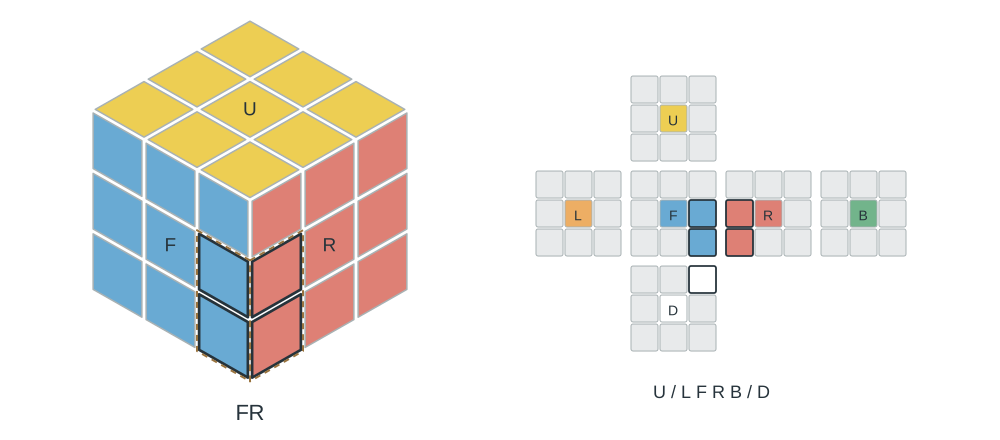
The positions of the two target pieces select the class; their orientations select the case within it. When both pieces are on U or in their own target positions, the case is standard F2L, including a twisted corner at DFR or a flipped edge at FR.
| Edge on U | Edge at FR | Edge at FL, BR, BL | |
|---|---|---|---|
| Corner on U | Standard | Standard | A |
| Corner at DFR | Standard | Standard | C |
| Corner at DFL, DBR, DBL | B | D | E same slot / F different slots |
A. Corner on top, edge in another slot
The catalog puts the corner at UFR; from UFL, UBR, or UBL, first turn U', U, or U2. The edge stays in its middle-layer slot. A01–A04 have white up: A01 and A02 put the edge in BR with mirrors in FL, and A03 and A04 put it in BL as their own mirrors. A05–A10 have white right, with the edge in BR for A05 and A06, FL for A07 and A08, and BL for A09 and A10; their mirrors have white front.
White faces up
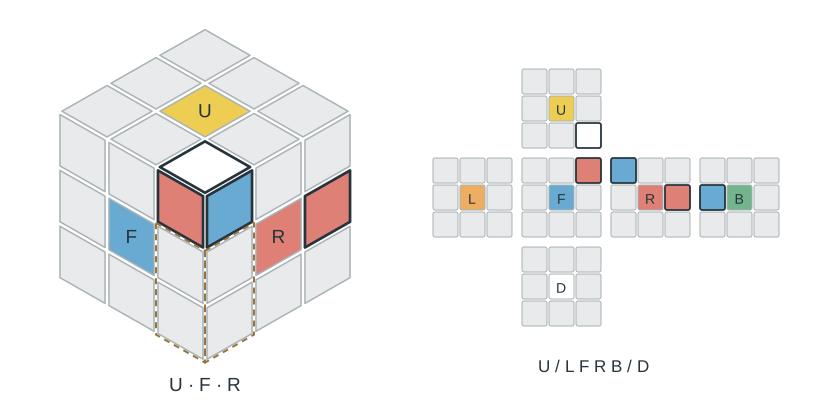
U' R' U R2 U' R'
Mirror
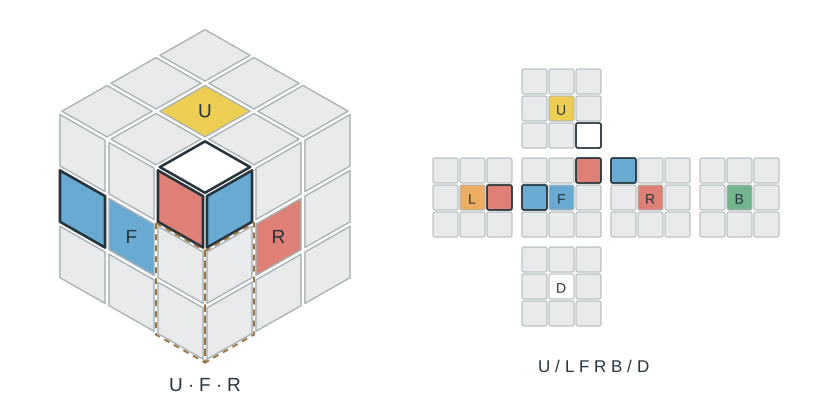
U F U' F2 U F
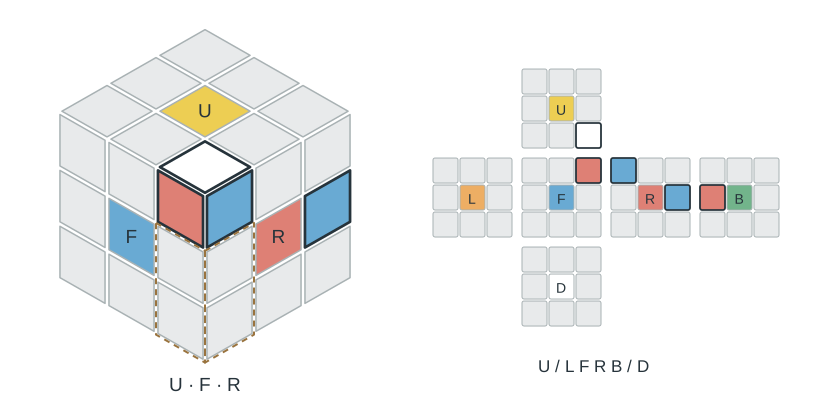
U2 (R' U R) U' (S R S')
Mirror
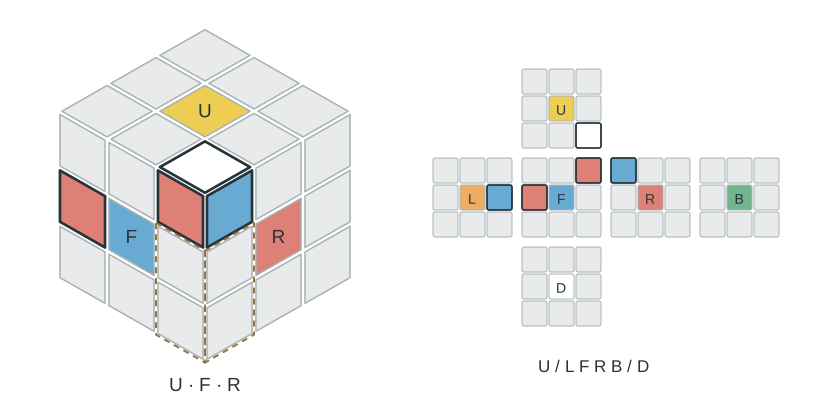
U2 F U' F' U M F' M'
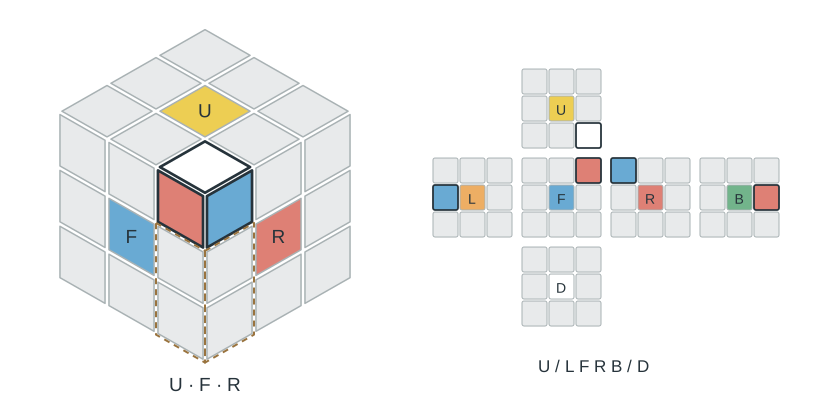
U2 F' (L U' L') F
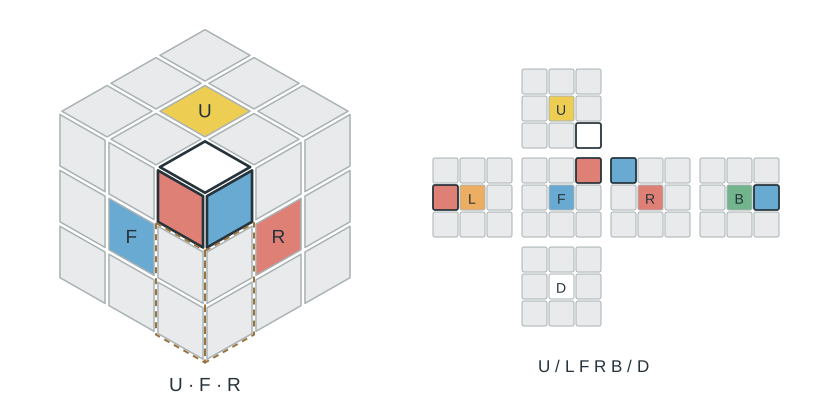
F2 D' L2 D F2
White faces right
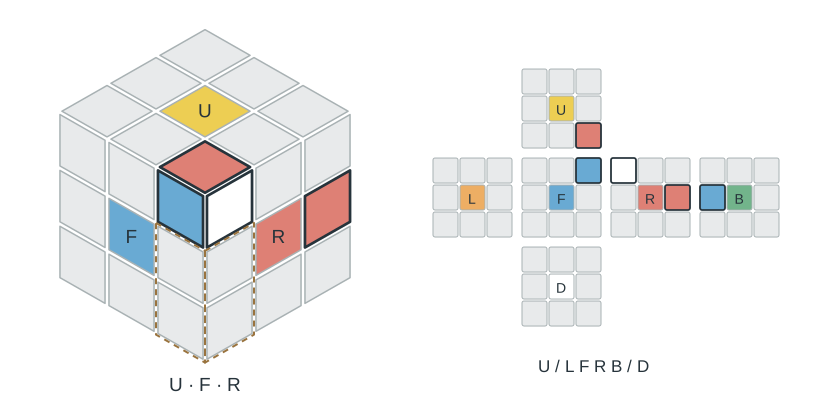
R' U' R2 U R'
Mirror
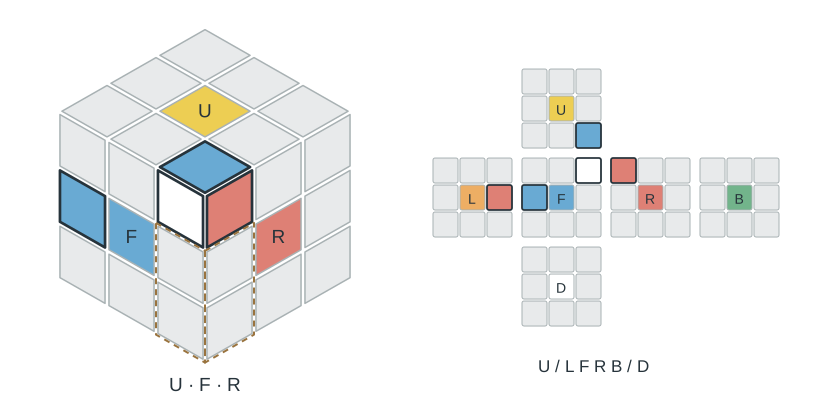
F U F2 U' F
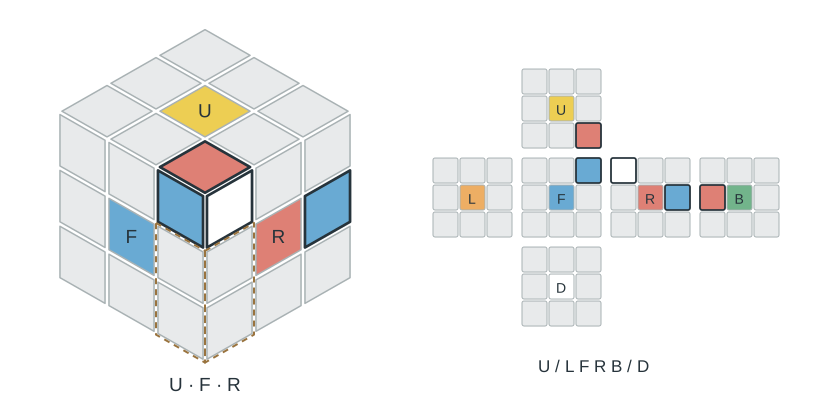
F D R D' F'
Mirror
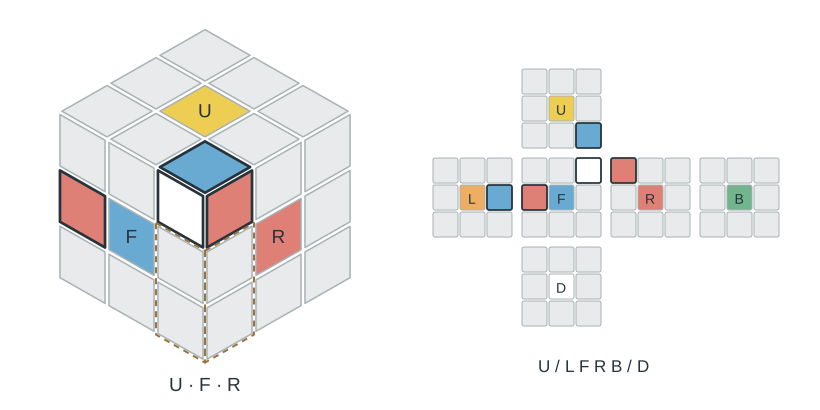
R' D' F' D R
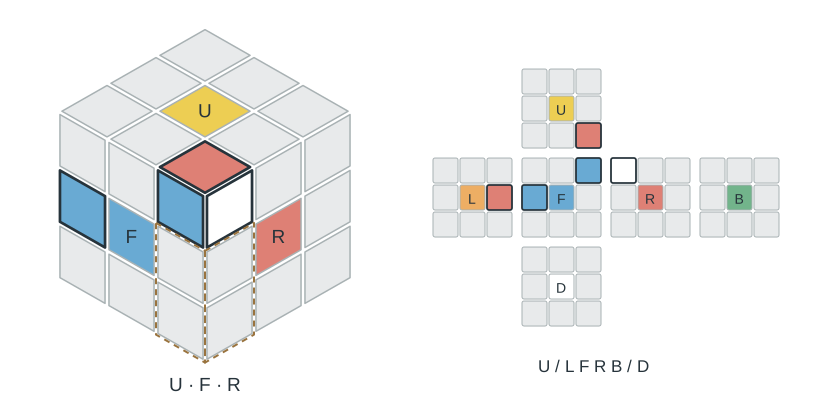
U' (L' U' L) (R U' R')
Mirror
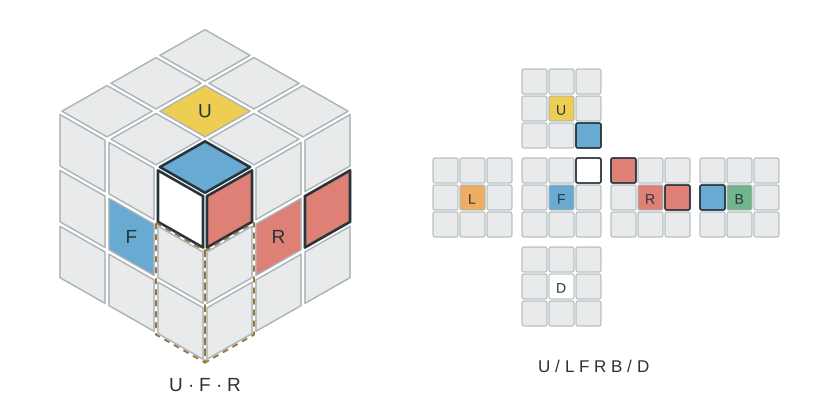
U B U B' F' U F
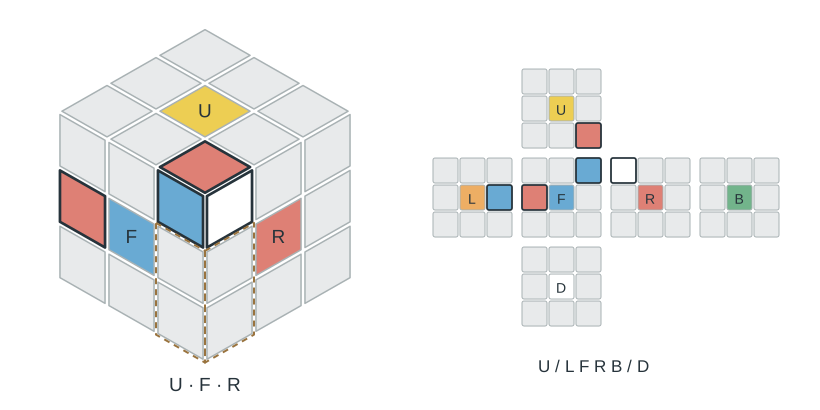
(F U2 F') (R U R')
Mirror
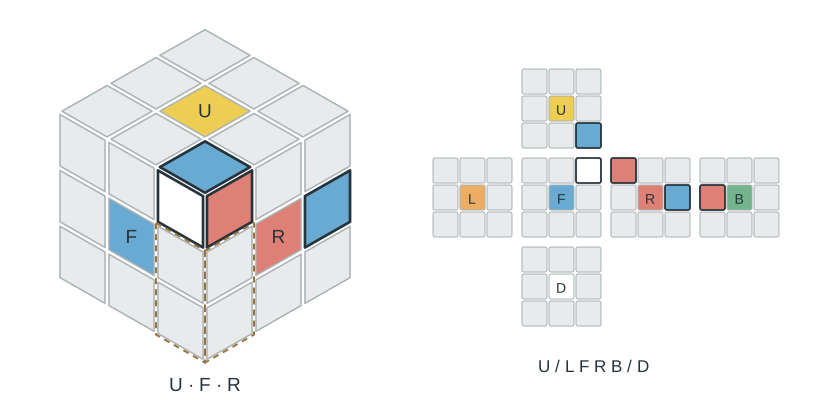
R' U2 R F' U' F
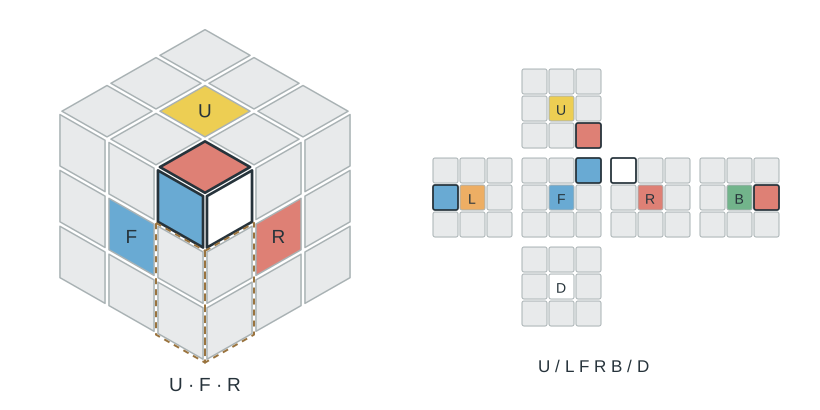
F' U (L U' L') F
Mirror
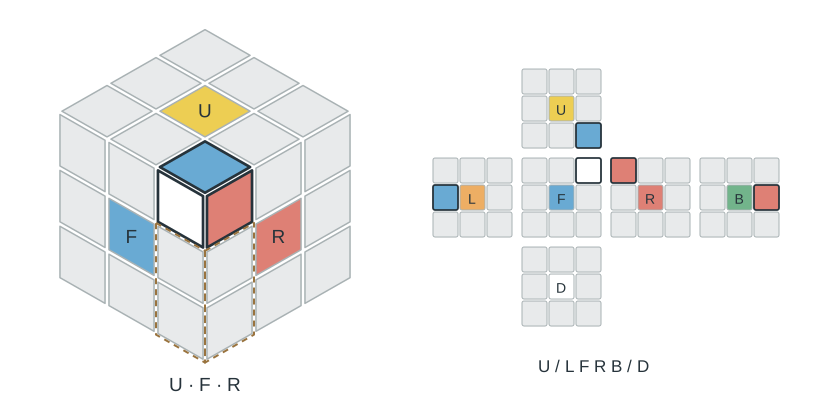
R U' B' U B R'
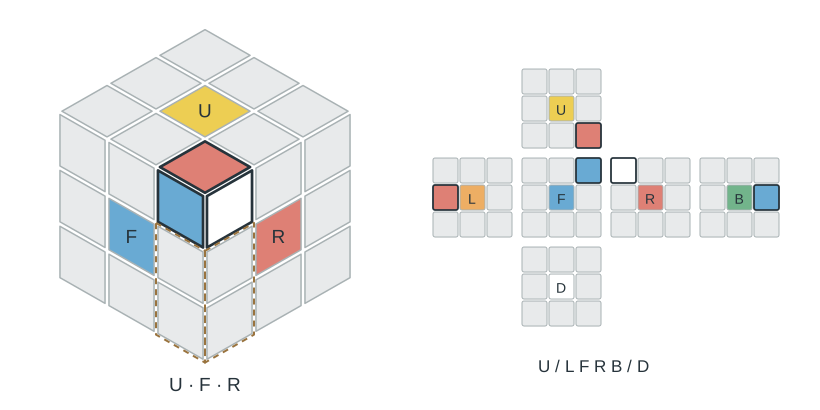
U' (L U L') (R U R')
Mirror
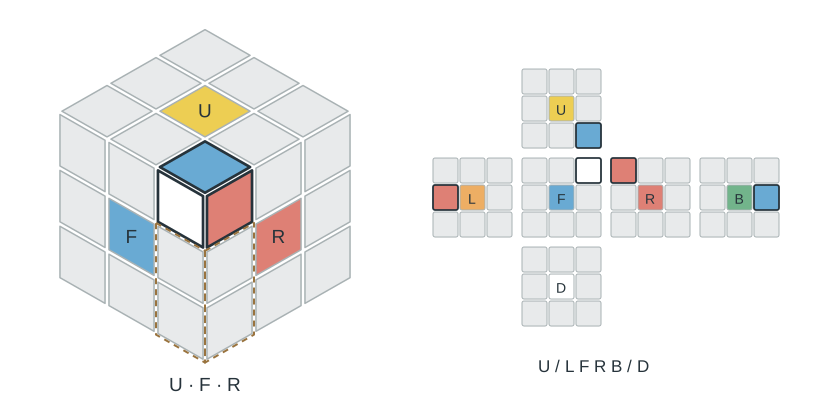
U B' U' B F' U' F
B. Corner in another slot, edge on top
The corner is at DFL, DBR, or DBL and the edge is on top. The catalog puts the edge at UR; from UF, UB, or UL, first turn U', U, or U2, which leaves the corner in place. Mirror diagrams also keep the edge at UR, with the needed U turn built into each mirror algorithm.
B01–B06 have the corner at DFL with white left in B01–B02, front in B03–B04, and down in B05–B06; odd numbers have blue up and even numbers blue right. Their mirrors put the corner at DBR. B07–B09 have the corner at DBL: B07 and B08 have white left with mirrors white back, and B09 has white down, with its mirror covering the other edge orientation.
DFL
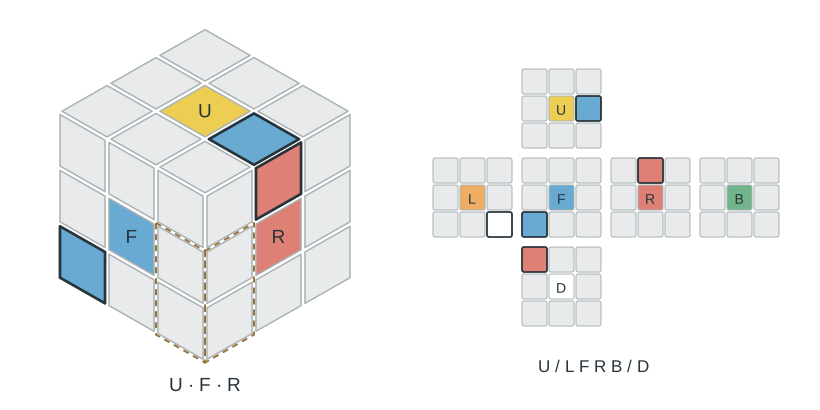
U L' (R U' R') L
Mirror
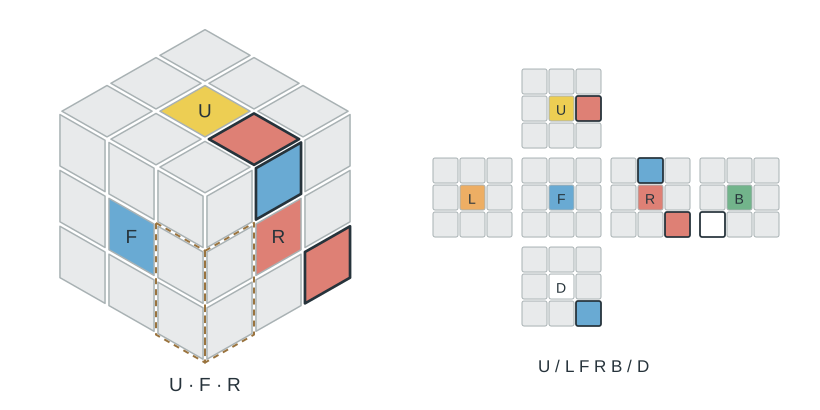
B F' U F B'
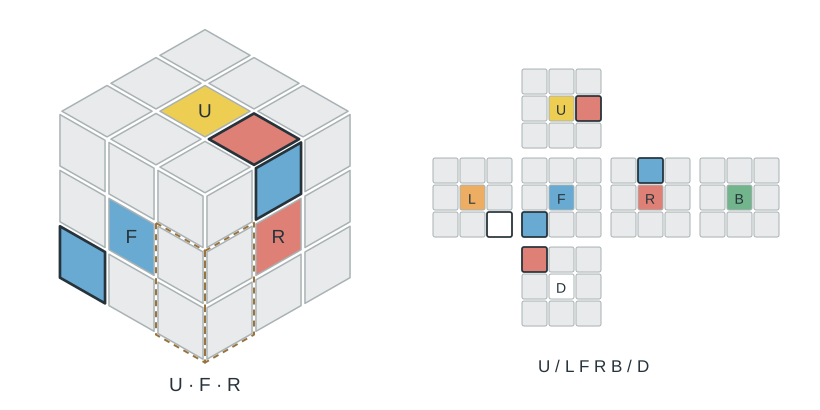
U2 L' U' L F' U' F
Mirror
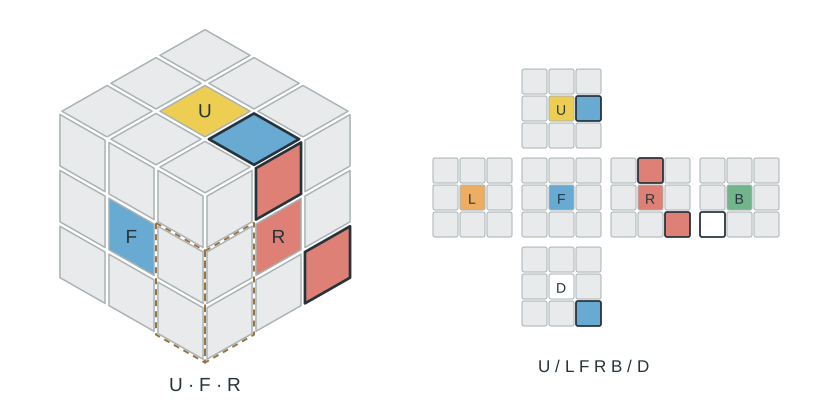
U' B U B' R U R'
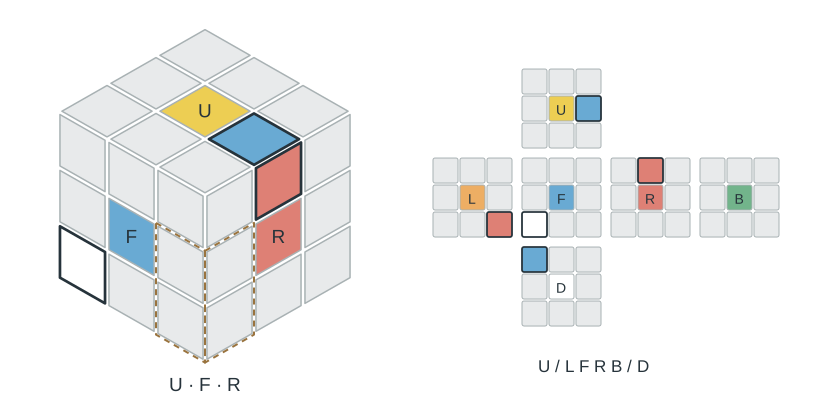
(F U2 F') U (R U R')
Mirror
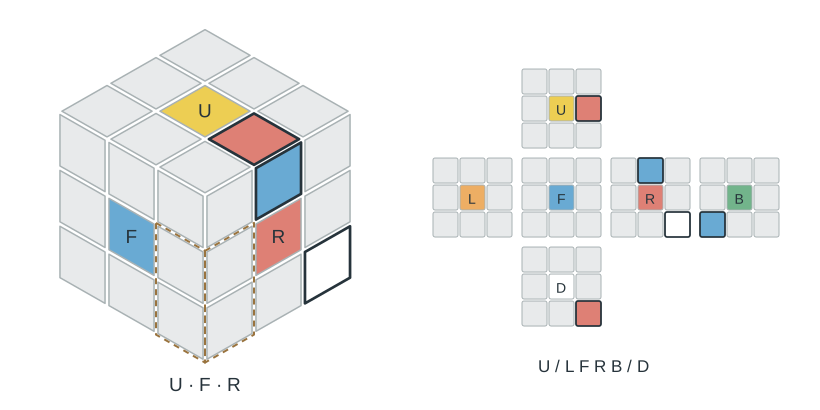
U R' U2 R U' F' U' F
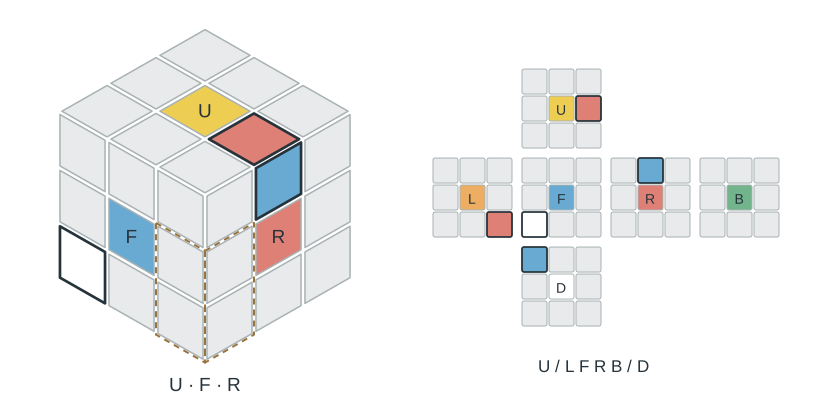
U2 F U F2 U2 F
Mirror
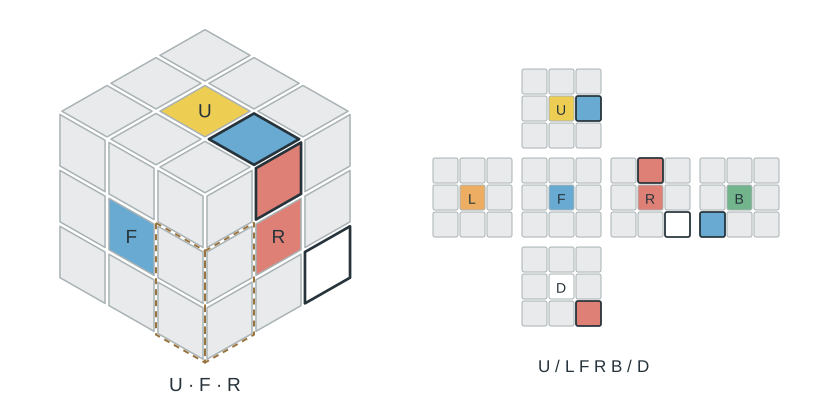
U' R' U' R2 U2 R'
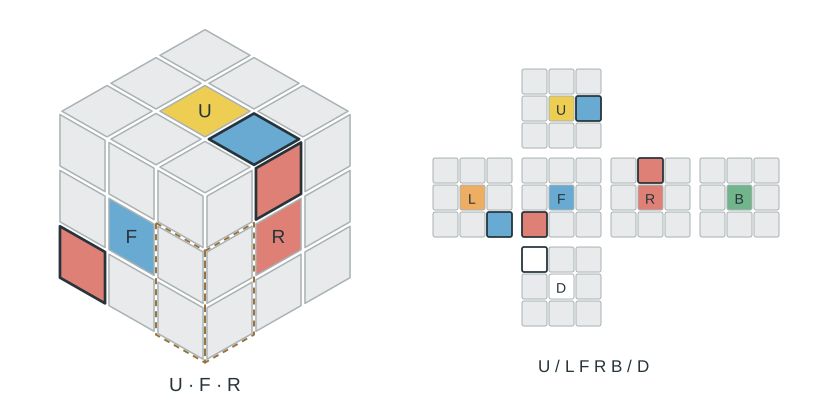
(L' U' L) (R U R')
Mirror
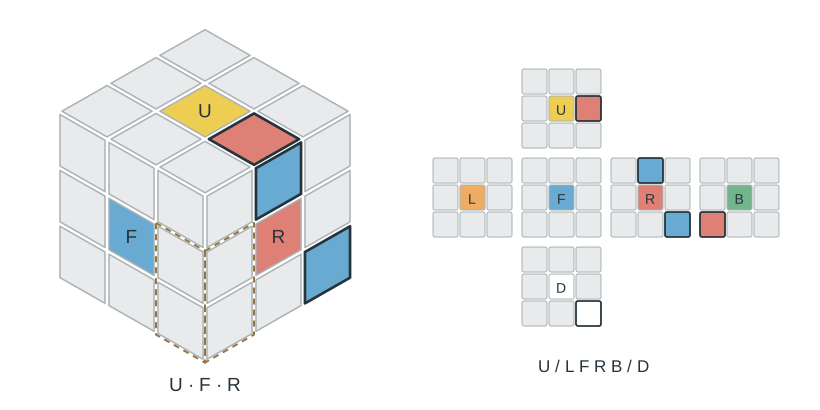
U B U B' F' U' F
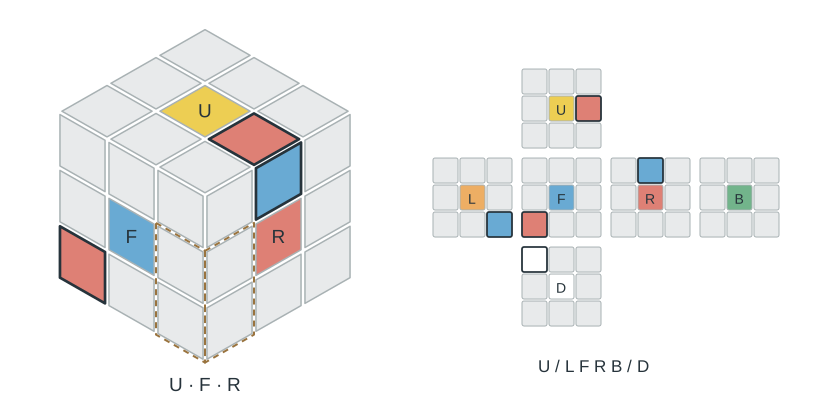
U F U2 F' U F' U' F
Mirror
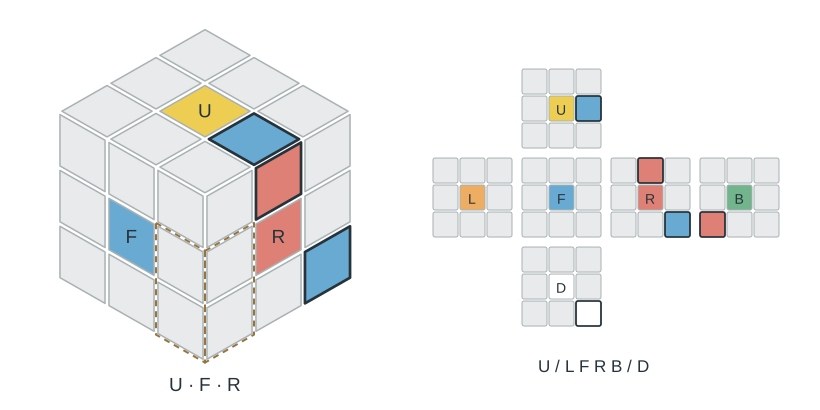
R' U2 R U' R U R'
DBL
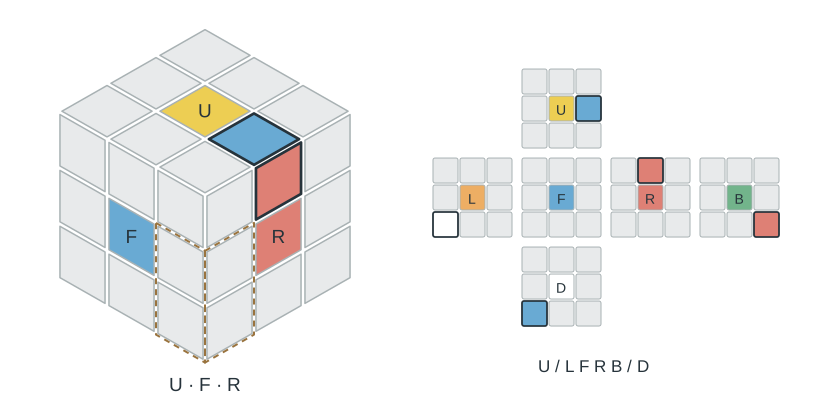
U (L U2 L') (R U R')
Mirror
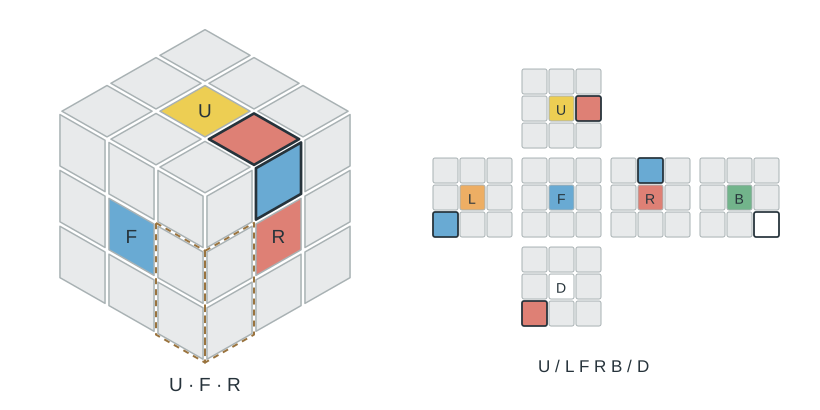
B' U2 B F' U' F
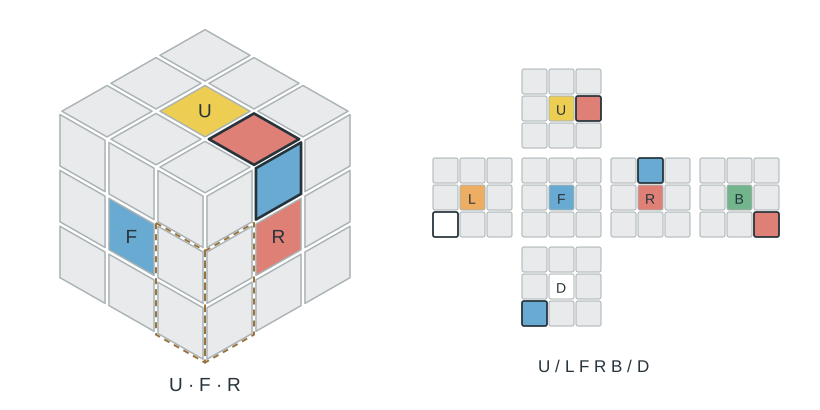
U' F' L U2 L' F
Mirror
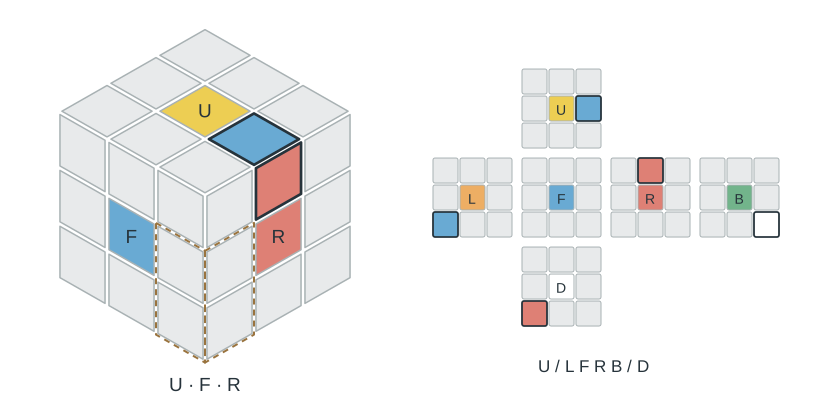
U2 R B' U2 B R'
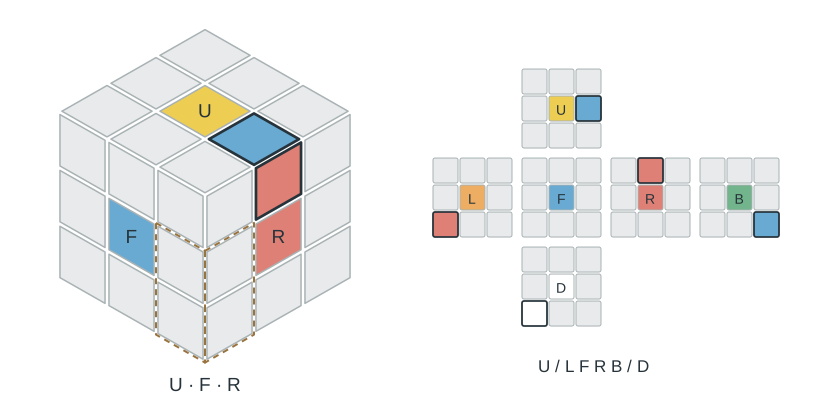
U' (B' U2 B) (R U R')
Mirror
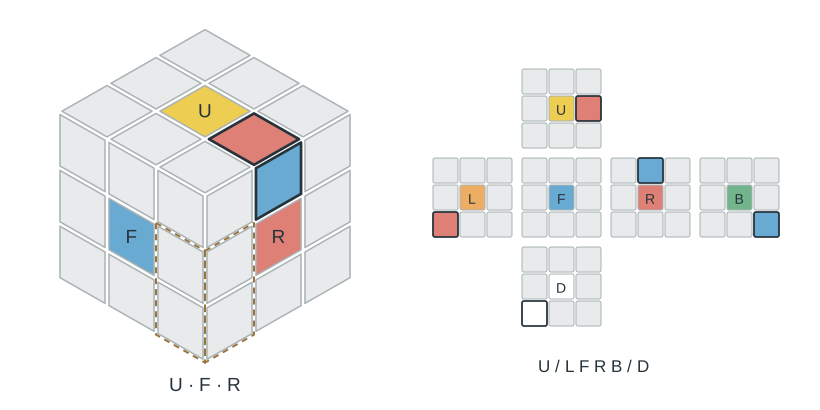
U2 L U2 L' F' U' F
C. Corner at DFR, edge in another slot
The corner is at DFR and the edge is in FL, BR, or BL. C01–C04 have white down, so the corner is solved: C01 and C02 put the edge in FL with mirrors in BR, and C03 and C04 put it in BL as their own mirrors. C05–C10 have the corner twisted with white front and the edge in FL (C05–C06), BR (C07–C08), or BL (C09–C10); their mirrors have white right.
White faces down
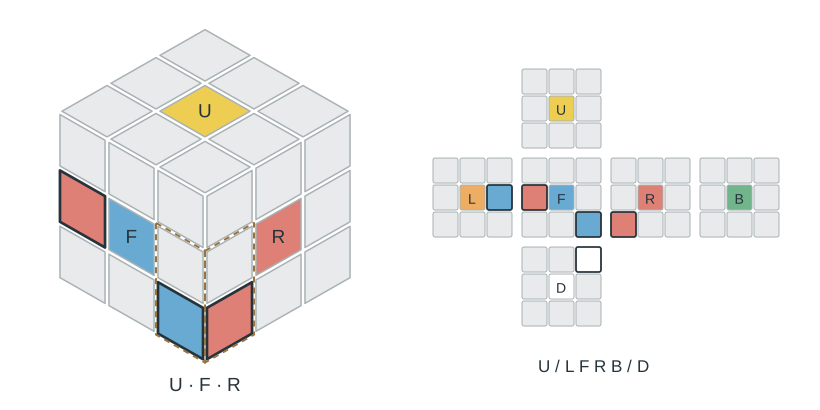
R (F U' F') R'
Mirror
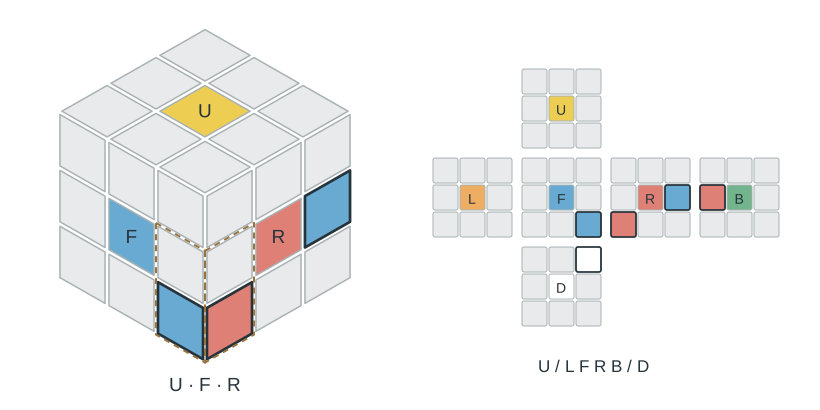
F' R' U R F
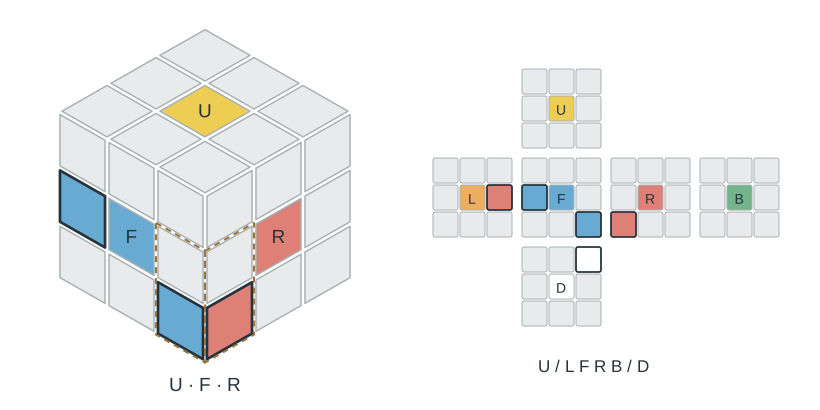
F L F2 L' F'
Mirror
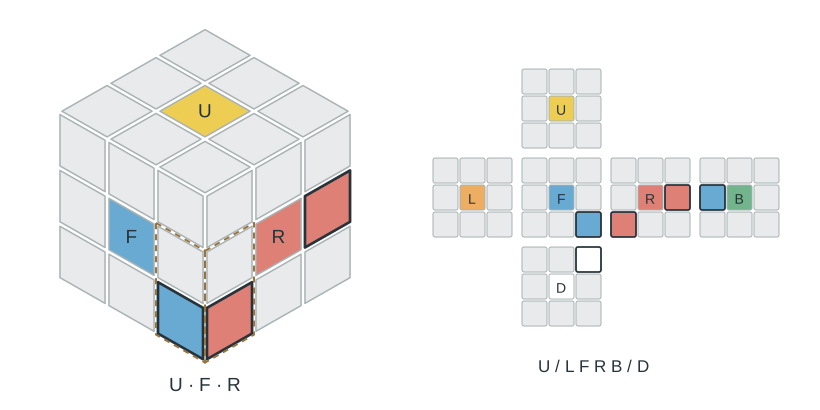
R' B' R2 B R
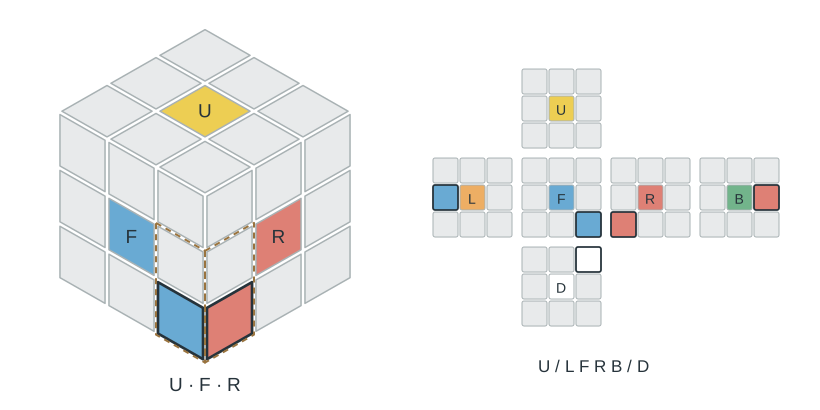
F2 L F U' L' F
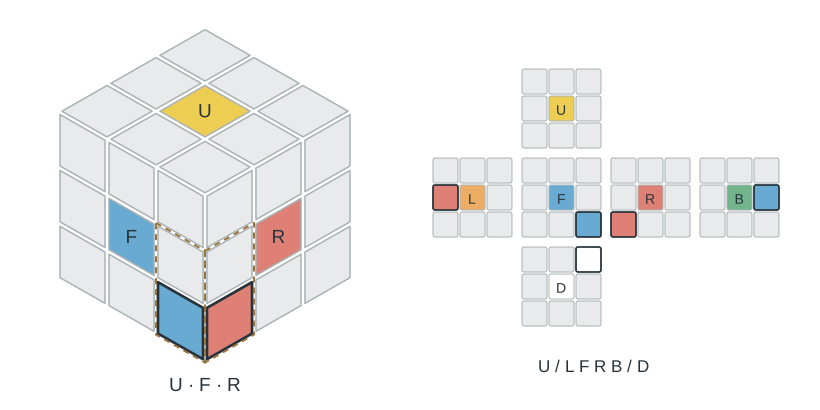
R U (L U' L') U' R'
White faces front
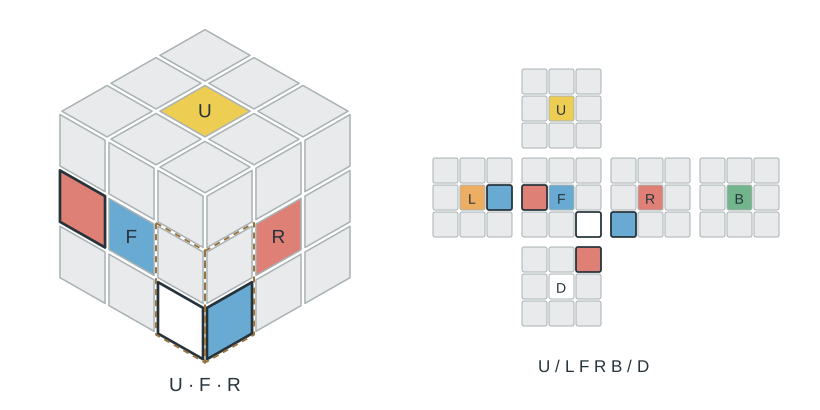
R U' R2 D' F' D R
Mirror
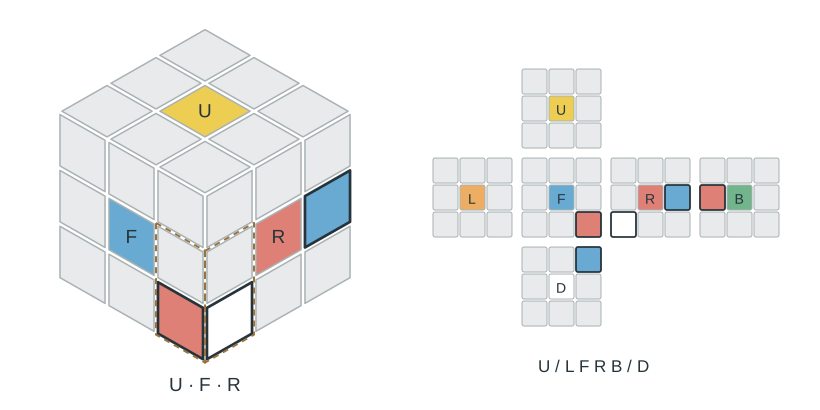
F' U F2 D R D' F'
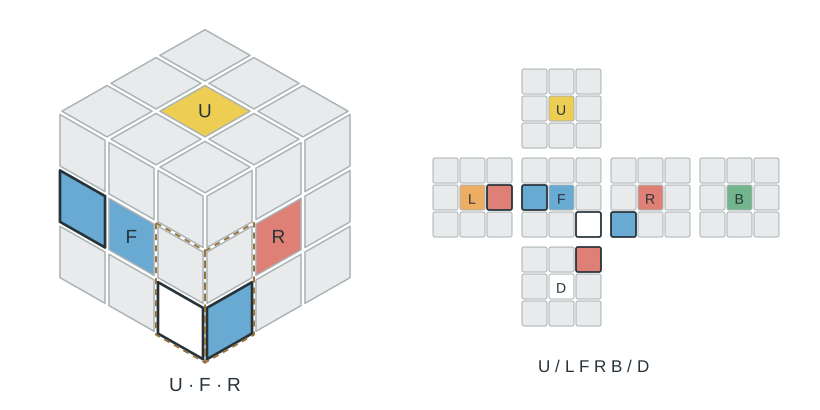
R U L' U2 L R'
Mirror
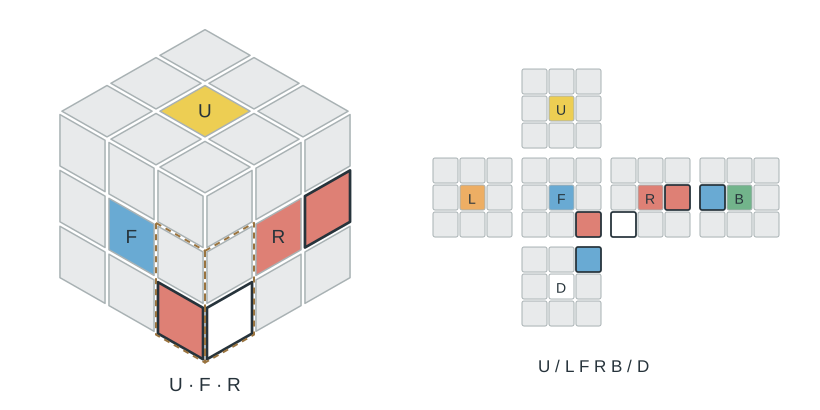
F' U' B U2 B' F
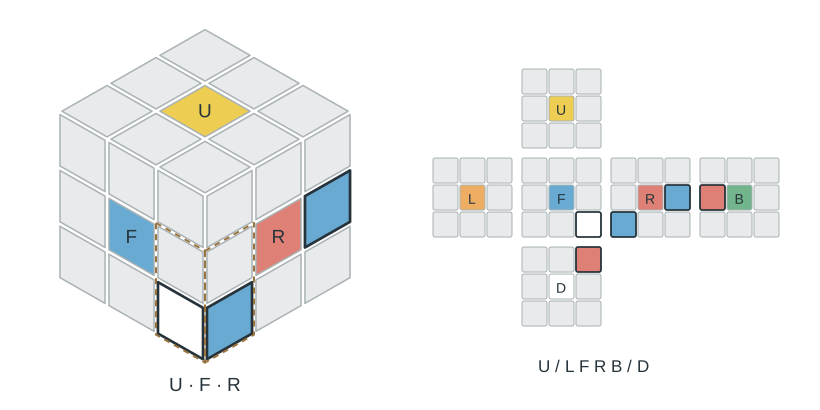
R' U2 F R F2 U' F
Mirror
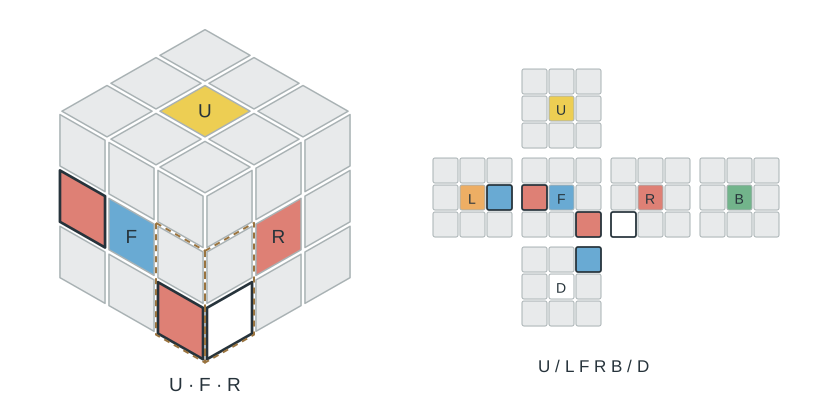
F U2 R' F' R2 U R'
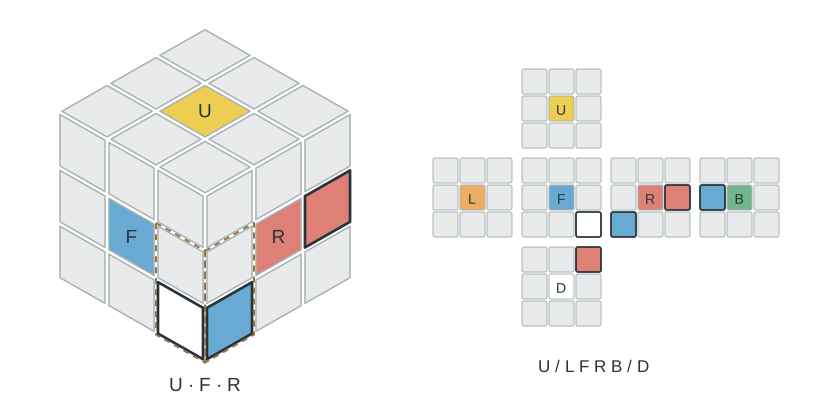
B U' F' U2 B' U F
Mirror
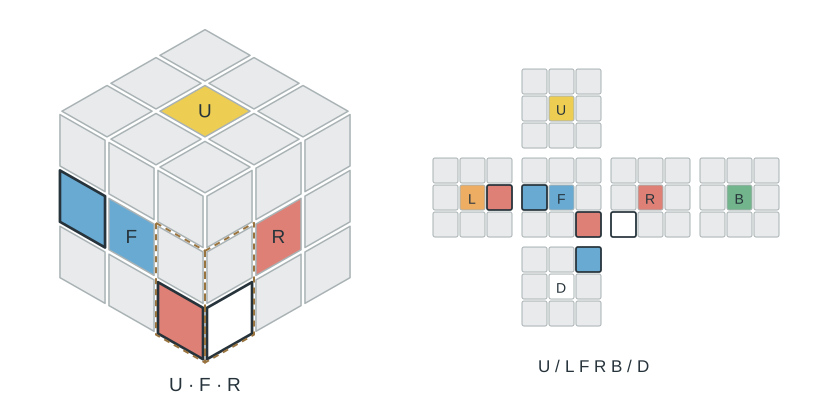
L' U R U2 L U' R'
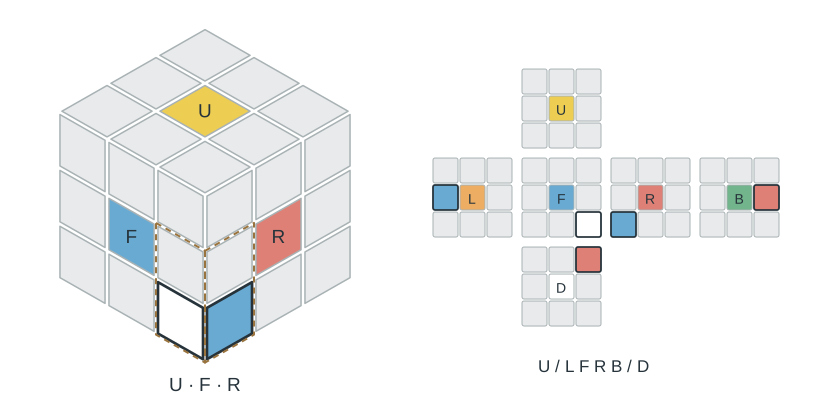
F' L U L' U2 F
Mirror
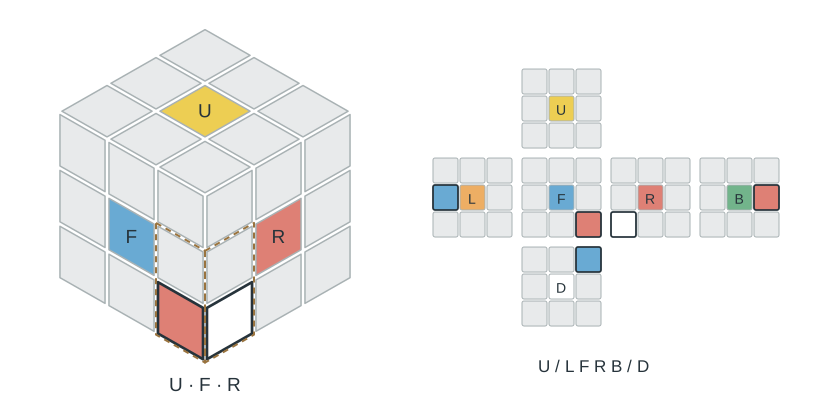
R B' U' B U2 R'
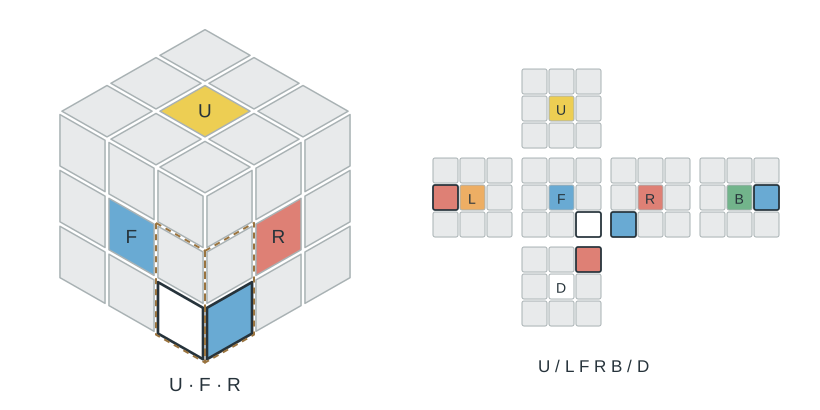
F' U F' D' L2 D F2
Mirror
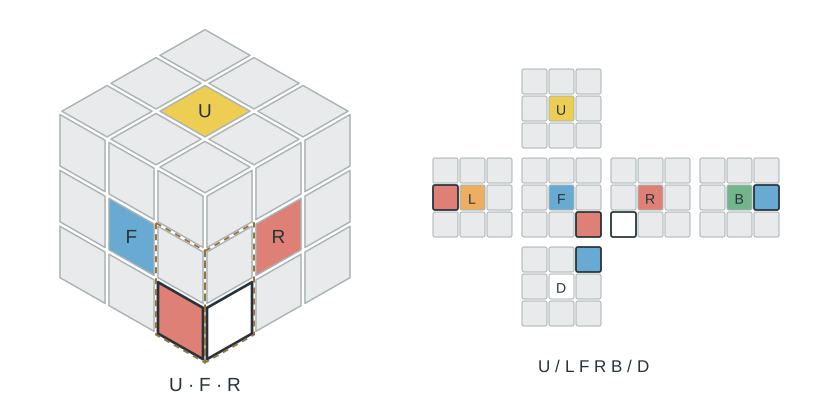
R U' R D B2 D' R2
D. Edge in FR, corner in another slot
The edge is at FR, solved with blue front or flipped with blue right, and the corner is at DFL, DBR, or DBL. D01–D06 have the corner at DFL with white left, front, or down, each with both edge orientations; their mirrors put it at DBR. D07–D10 have the corner at DBL: D07 and D08 have white left with mirrors white back, and D09 and D10 have white down as their own mirrors.
DFL
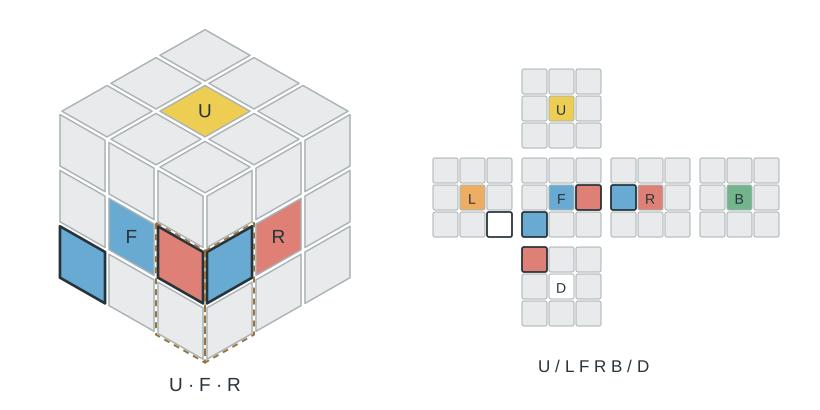
(R' F R U' F') (R U' R')
Mirror
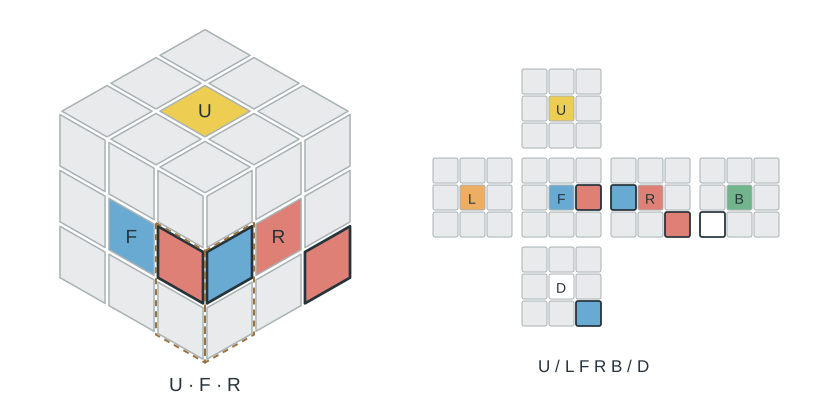
F R' F' U R F' U F
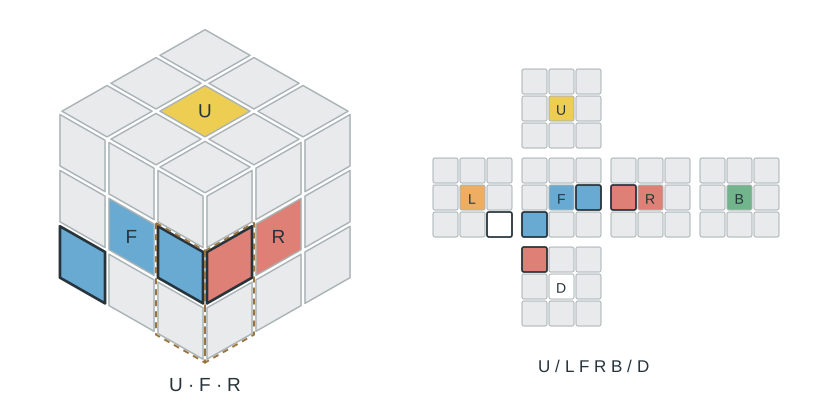
R U L' U' L R'
Mirror
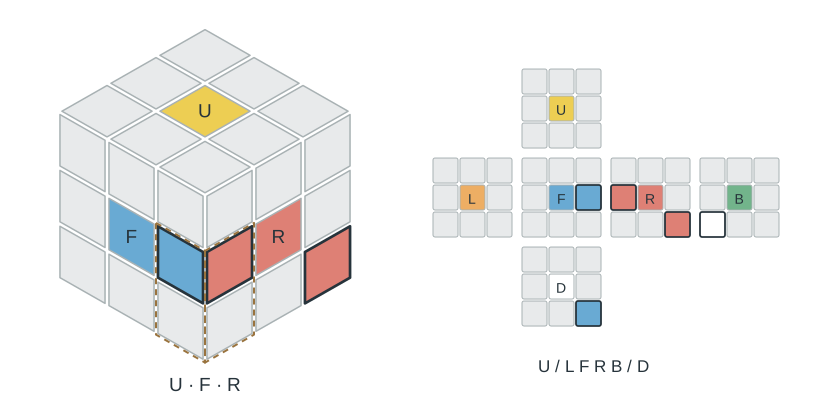
F' U' B U B' F
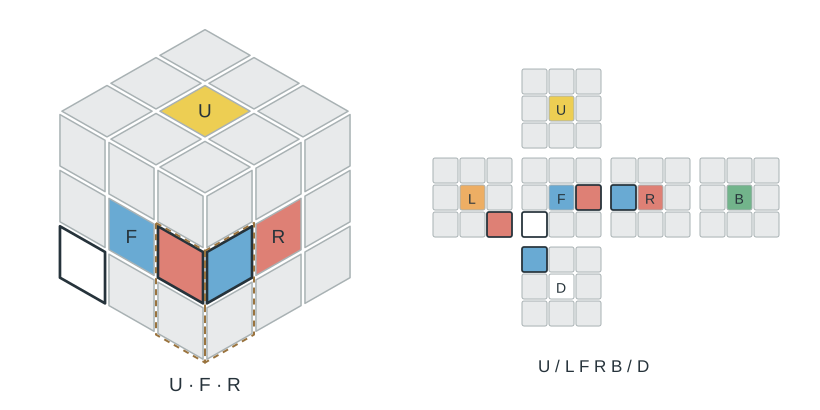
L F2 L' F U' F
Mirror
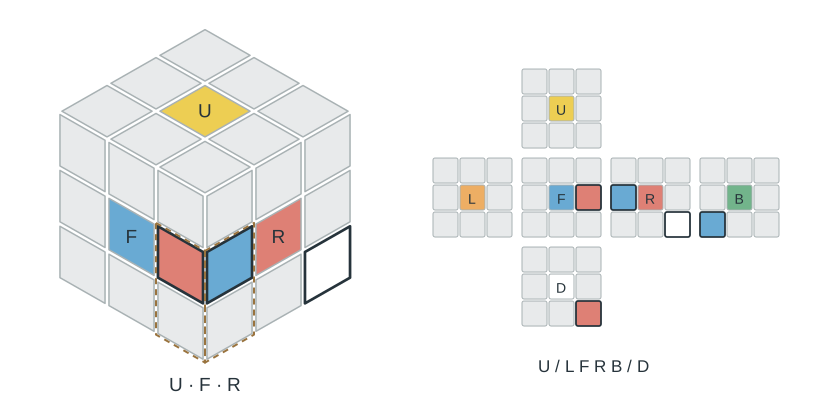
B' R2 B R' U R'
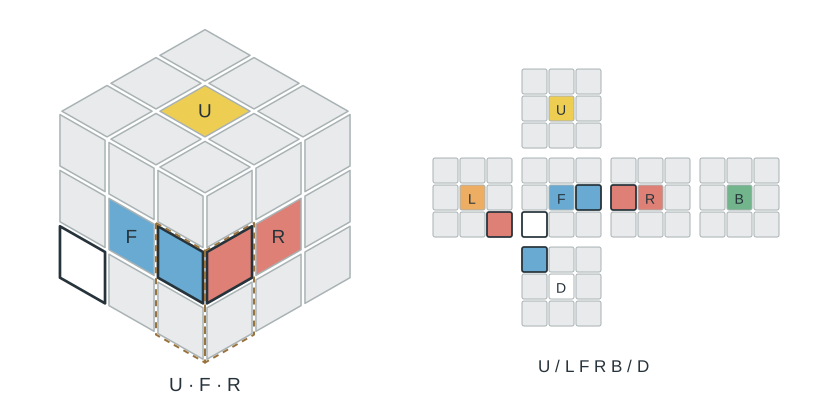
F' U F2 U F2 U2 F
Mirror
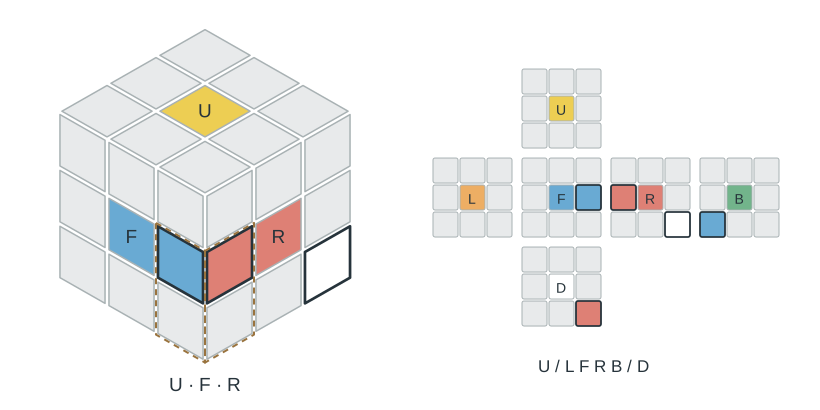
R U' R2 U' R2 U2 R'
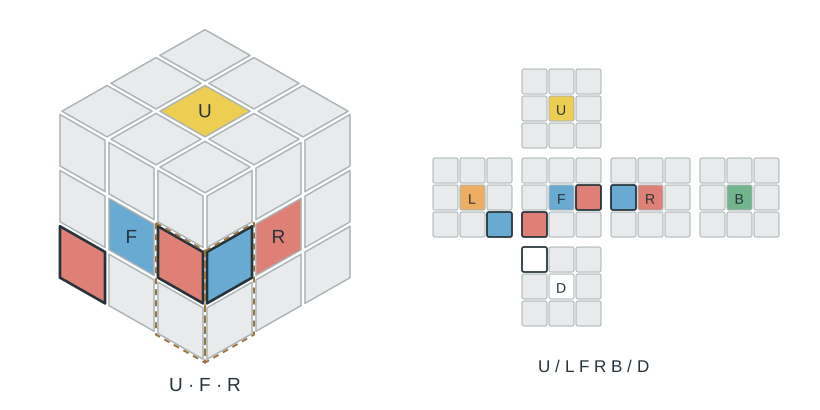
(F' U' F) (L' U' L) (R U R')
Mirror
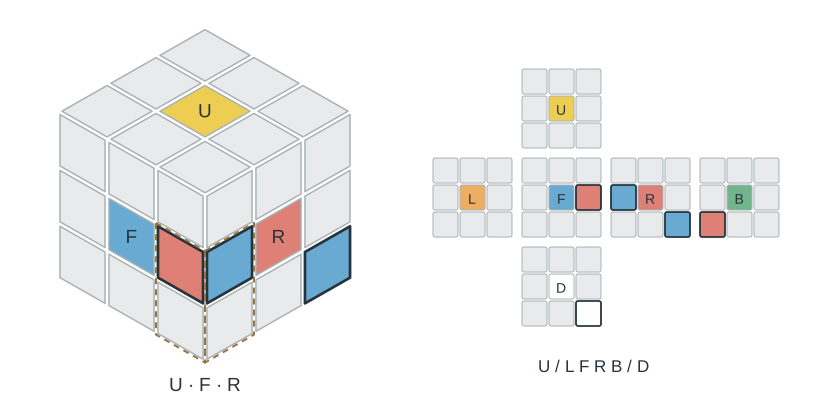
R U R' B U B' F' U' F
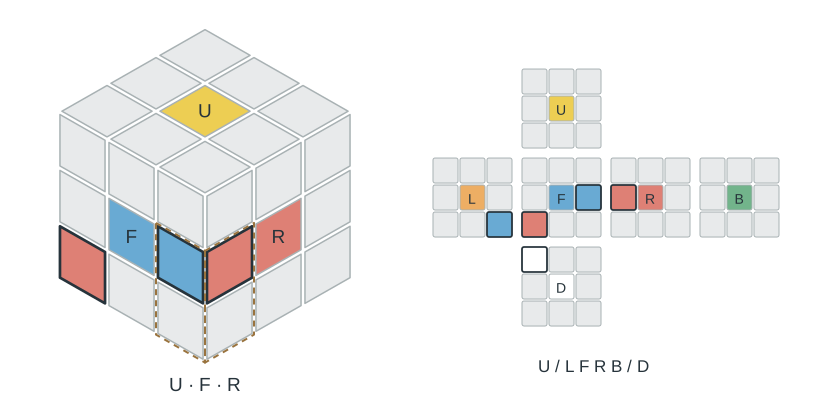
L' R U L U' R'
Mirror
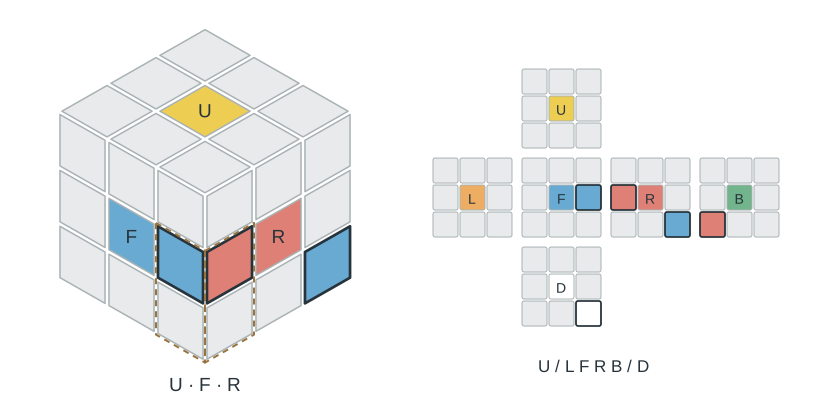
B F' U' B' U F
DBL
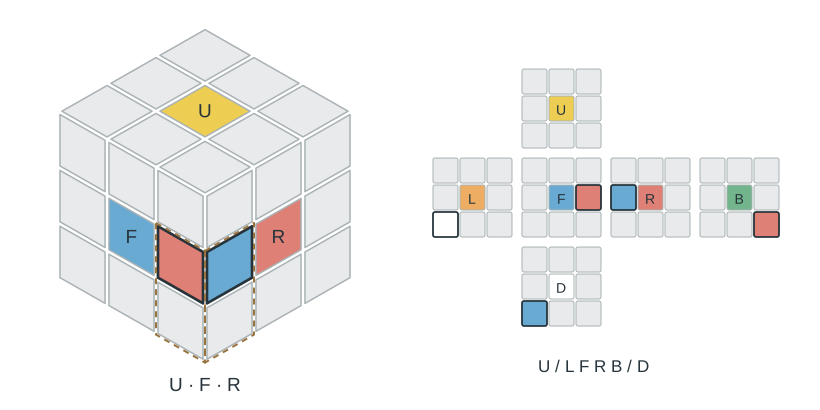
F' L' U L2 U' F' L' F2
Mirror
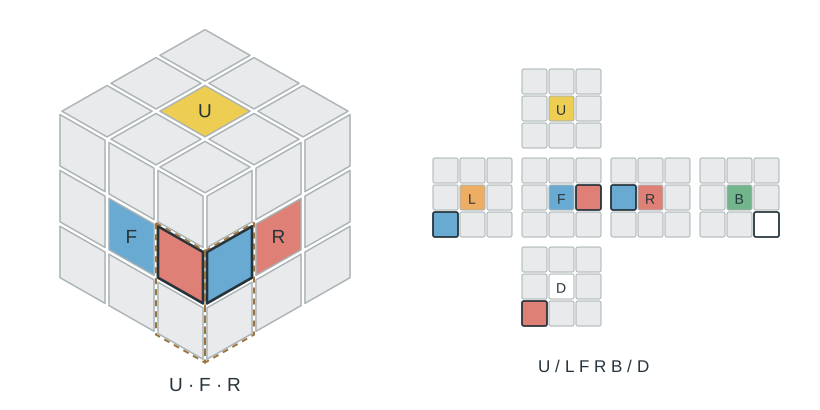
R B U' B2 U R B R2
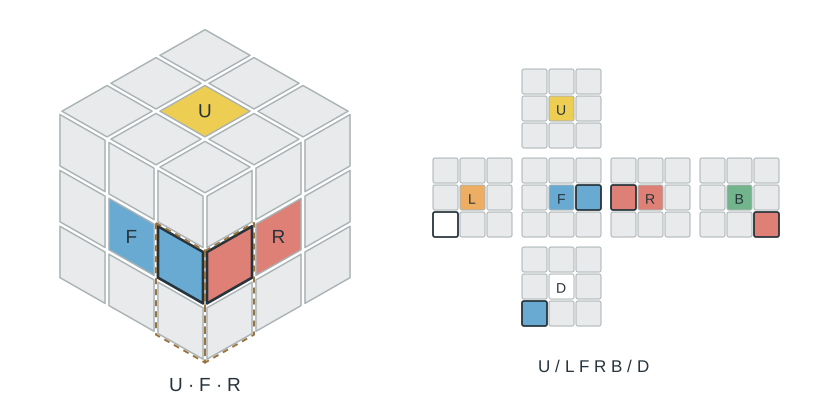
F' U2 L U2 L' F
Mirror
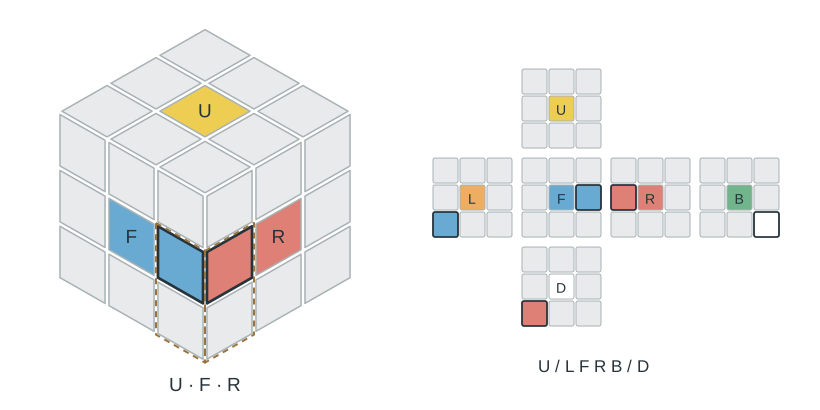
R U2 B' U2 B R'
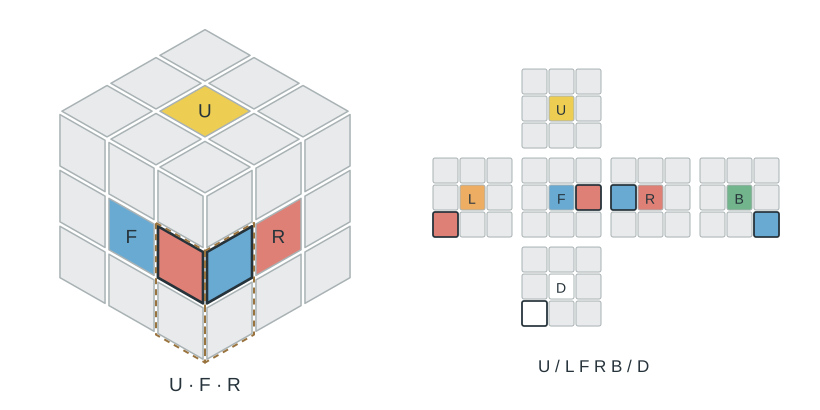
L R U' L' R' F' U2 F
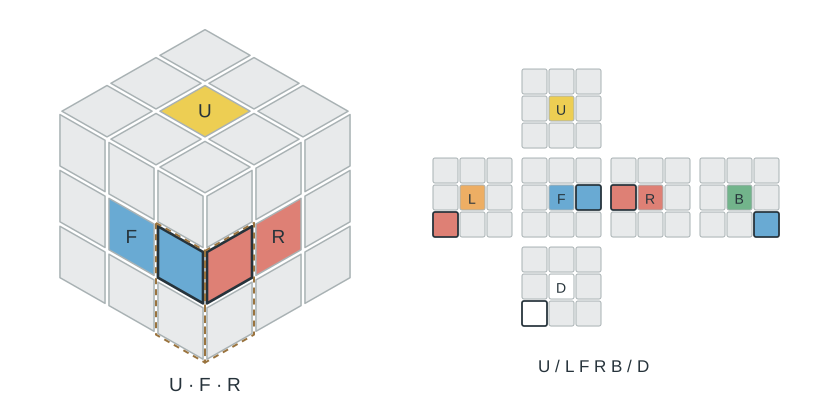
F' U' L U' L' U2 F
E. Corner and edge in the same wrong slot
The corner and edge sit in the same wrong slot, in all six combinations of three corner orientations and two edge orientations. E01–E06 are in FL with mirrors in BR. E07–E10 are in BL: E07 and E08 have white down as their own mirrors, and E09 and E10 have white left with mirrors white back. E01 and E07 are already joined pairs: their colors match each other but not the surrounding centers.
FL
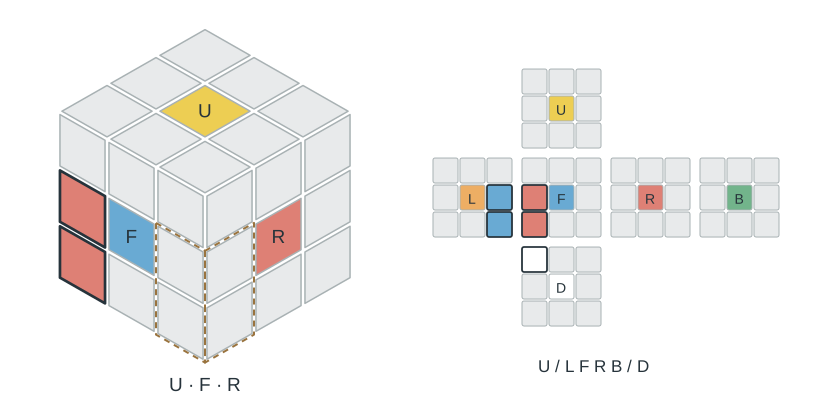
R' F R2 U' R2 F' R
Mirror
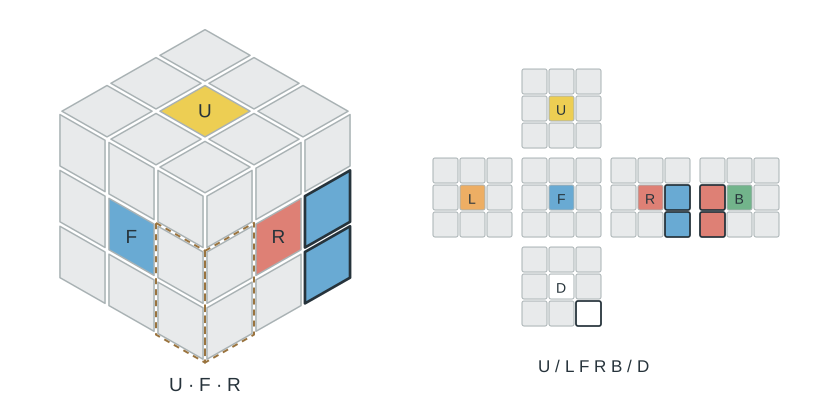
F R' F2 U F2 R F'
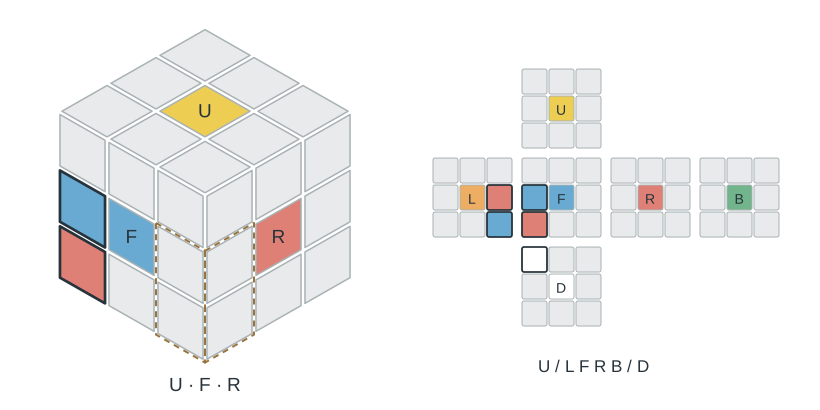
F U F U' F U' F2 U2 F2
Mirror
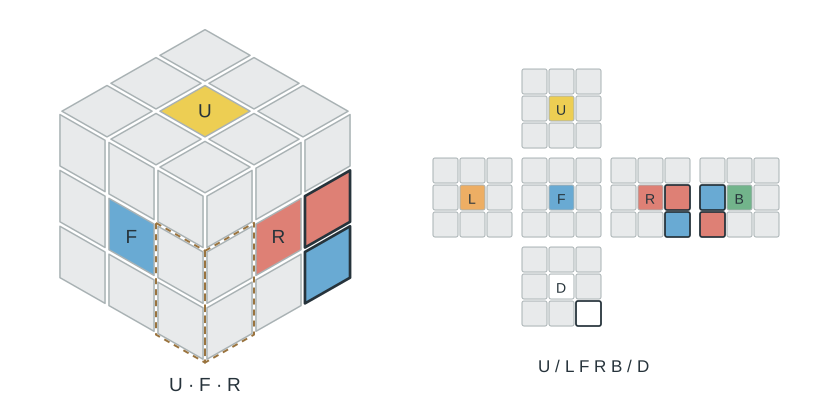
R' U' R' U R' U R2 U2 R2
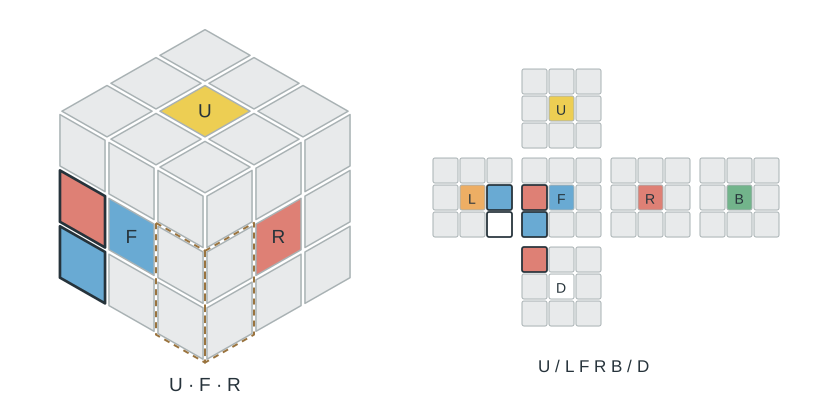
F L F' L' F2 U' F
Mirror
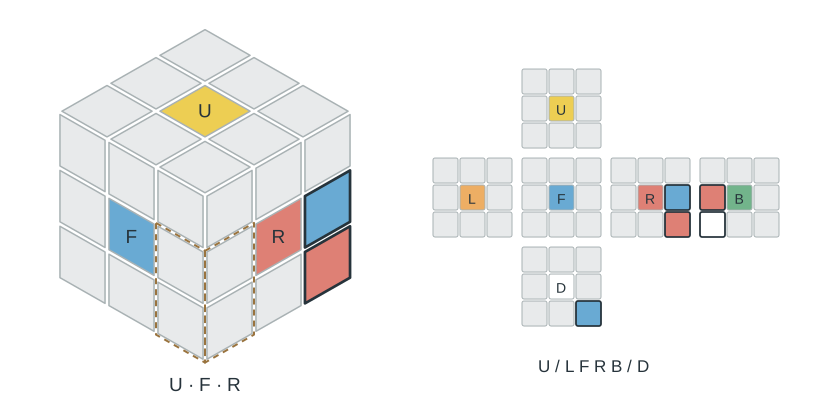
R' B' R B R2 U R'
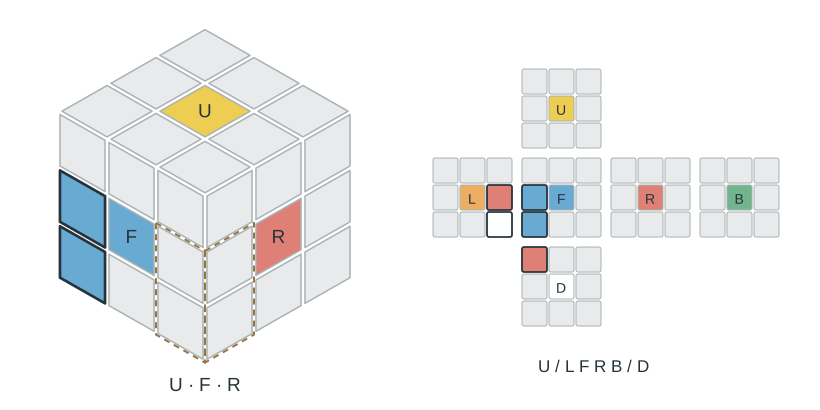
F' R2 U F' R2 F U' R2
Mirror
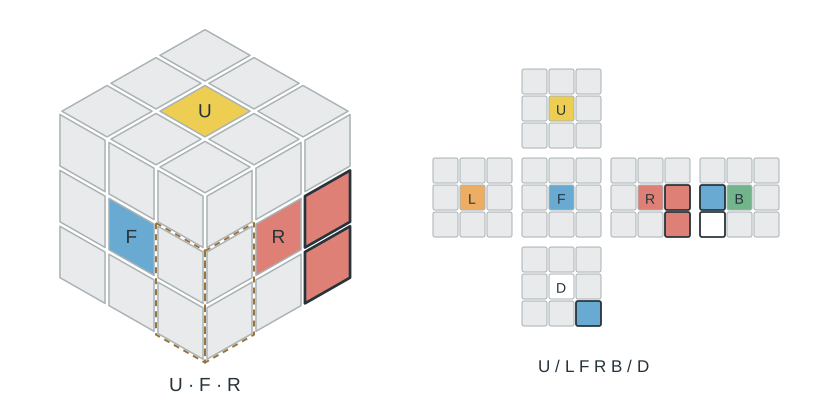
R F2 U' R F2 R' U F2
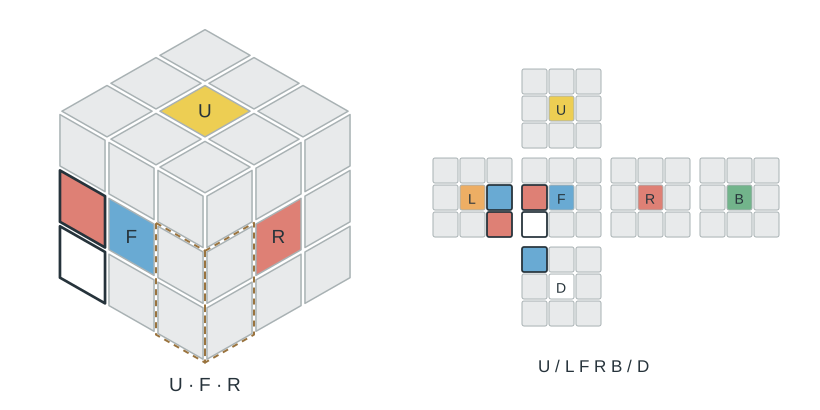
F U' F' R U2 R2 F R F'
Mirror
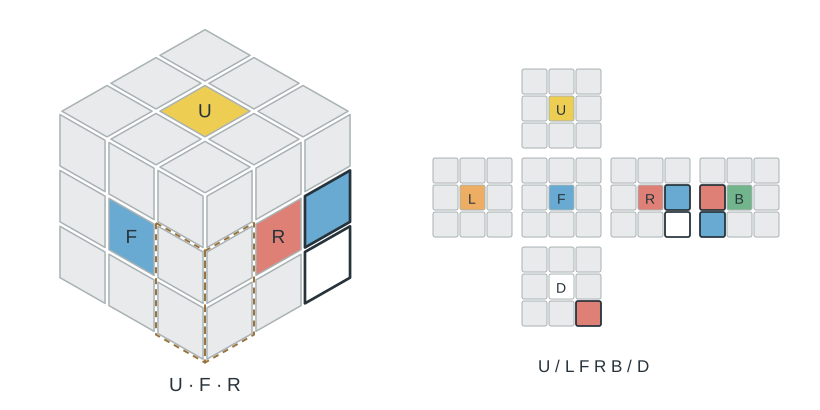
R' U R F' U2 F2 R' F' R
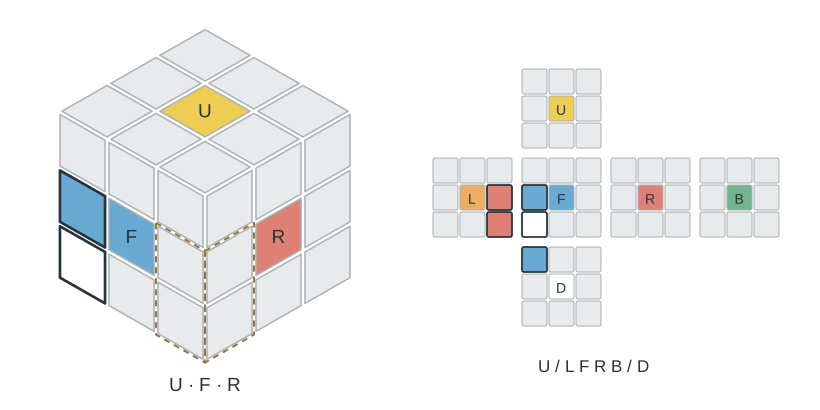
F U' F' L' U2 F' U' F L
Mirror
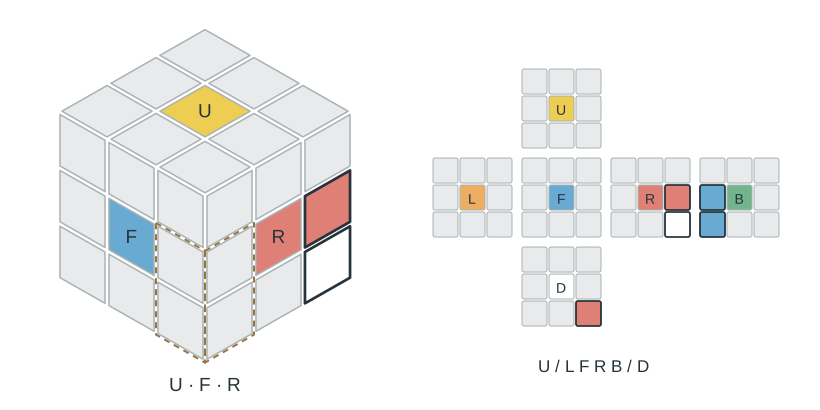
R' U R B U2 R U R' B'
BL
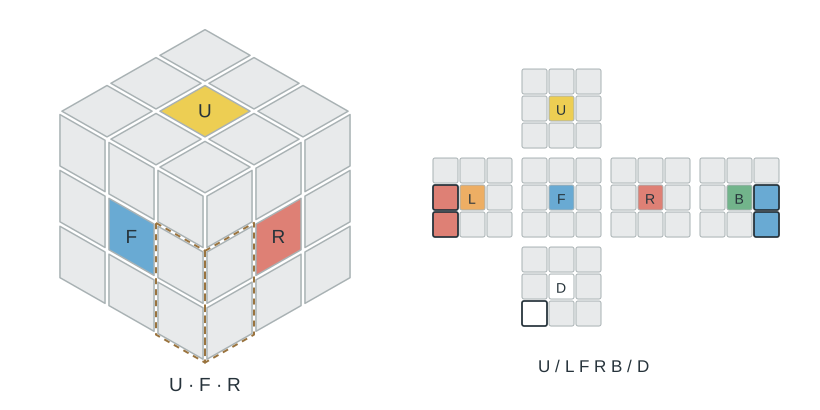
R (L U2 L') R'
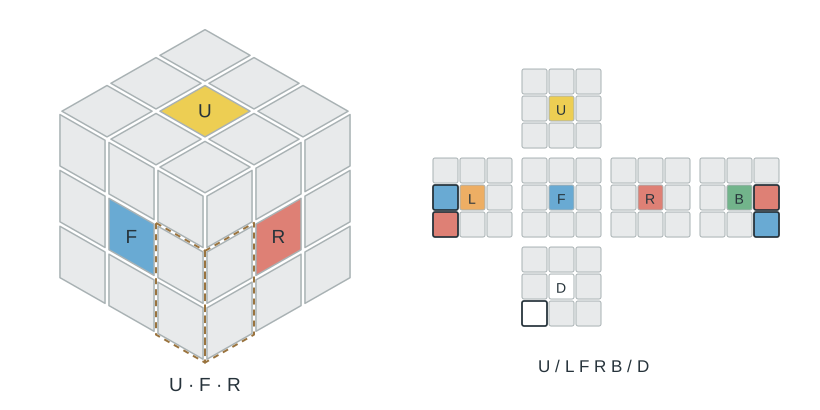
F' L U' L2 U2 L U2 F
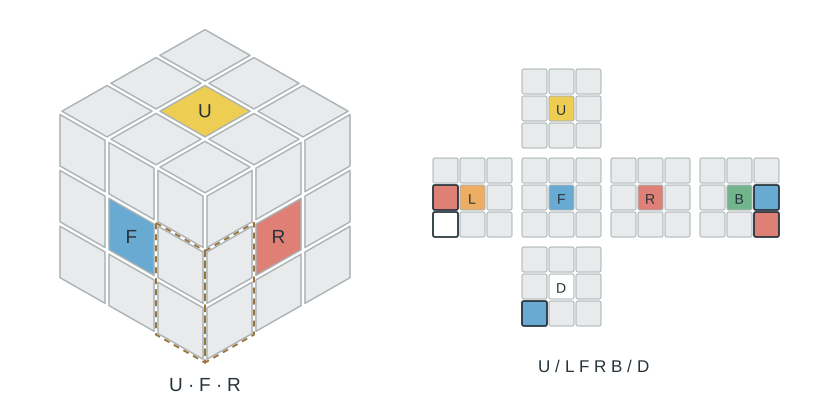
F D F2 U F' D' L2 F2
Mirror
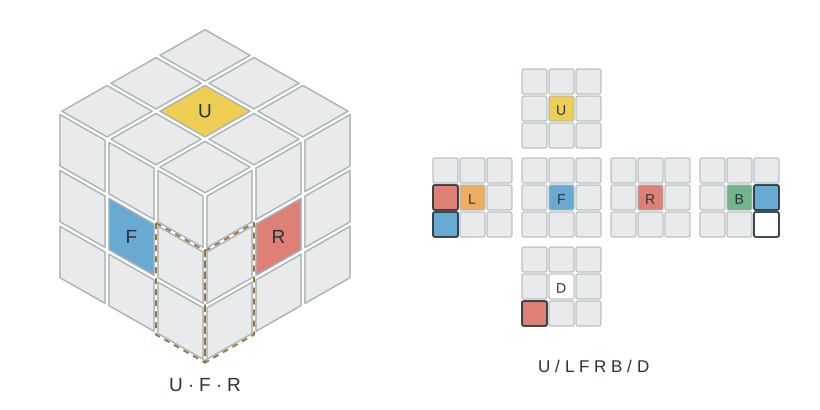
R' D' R2 U' R D B2 R2
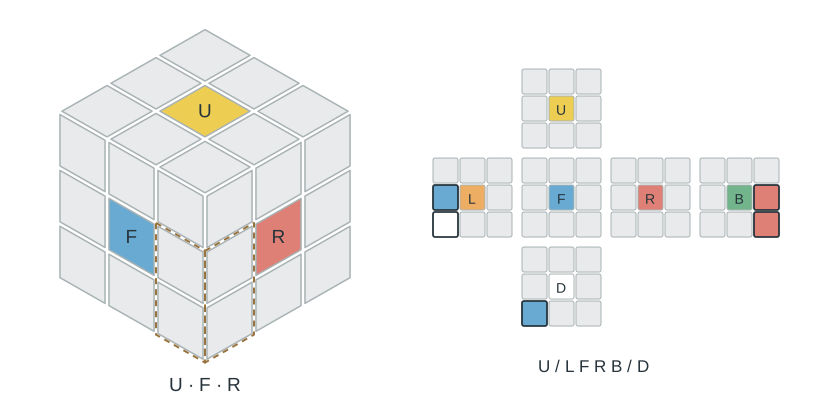
R U L2 F' L' F2 U' F' L' R'
Mirror
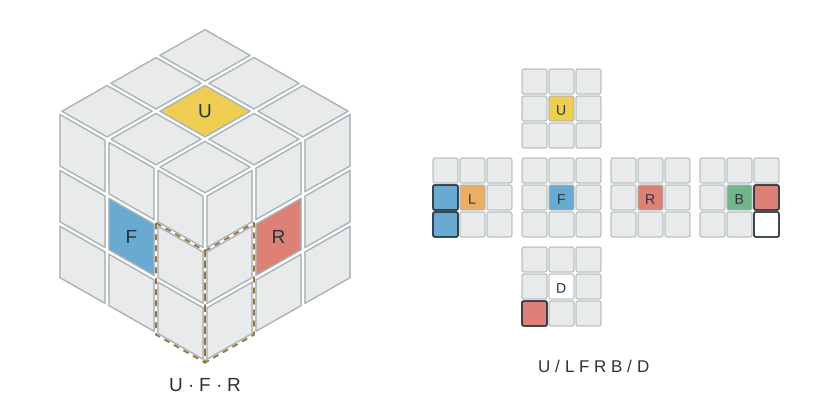
F' U' B2 R B R2 U R B F
F. Pieces in two different wrong slots
The corner and edge sit in two different wrong slots. Up to mirroring there are three position pairs, each with all three corner orientations and both edge orientations. F01–F06 have the corner at DFL and the edge in BR, mirrored to DBR and FL. F07–F12 have the corner at DFL and the edge in BL, mirrored to DBR and BL. F13–F18 have the corner at DBL and the edge in FL, mirrored to DBL and BR.
DFL + BR
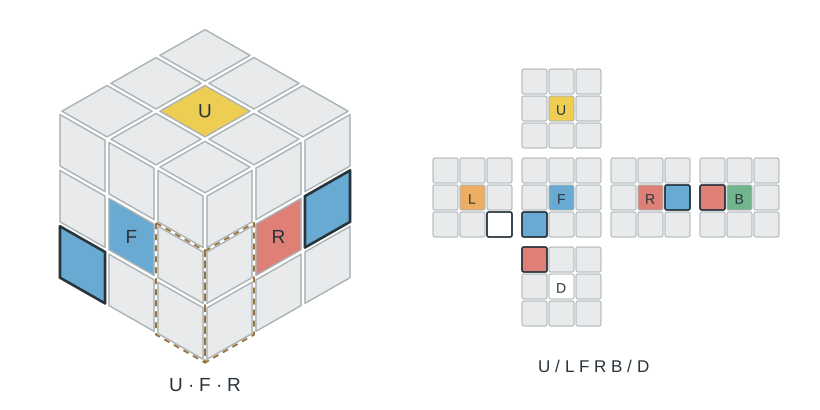
R F R U' F' U' R'
Mirror
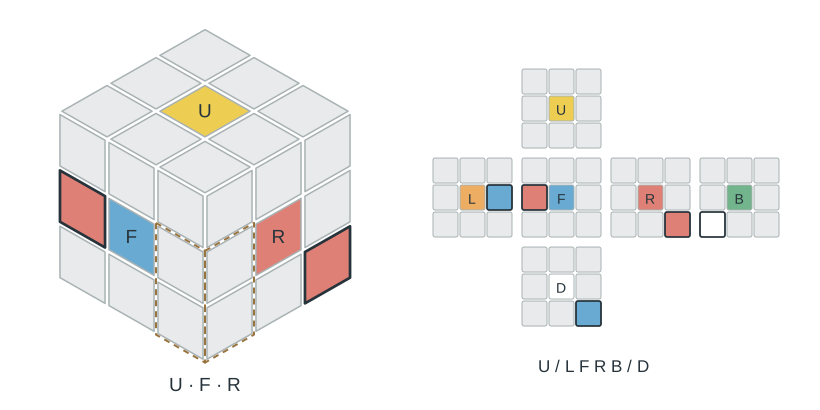
F' R' F' U R U F
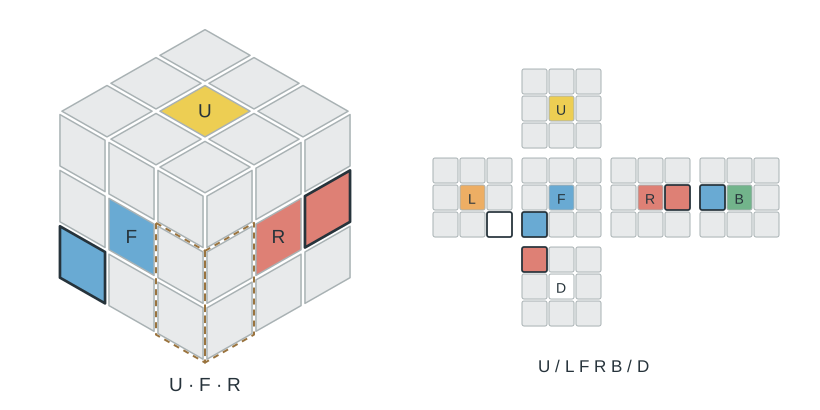
F' R2 U' R2 F U R2
Mirror
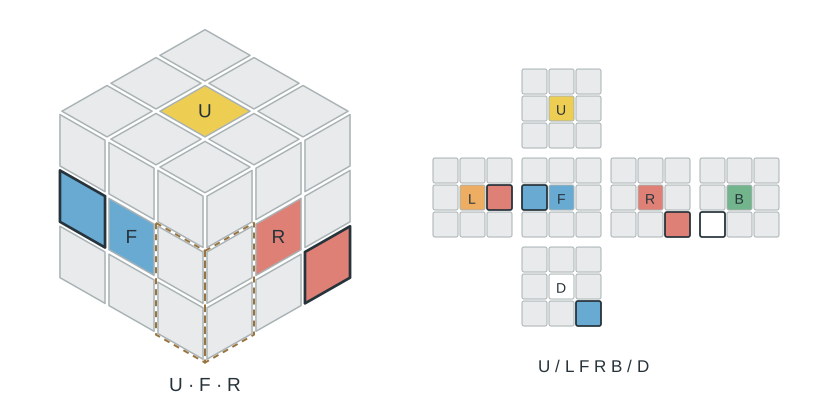
R F2 U F2 R' U' F2
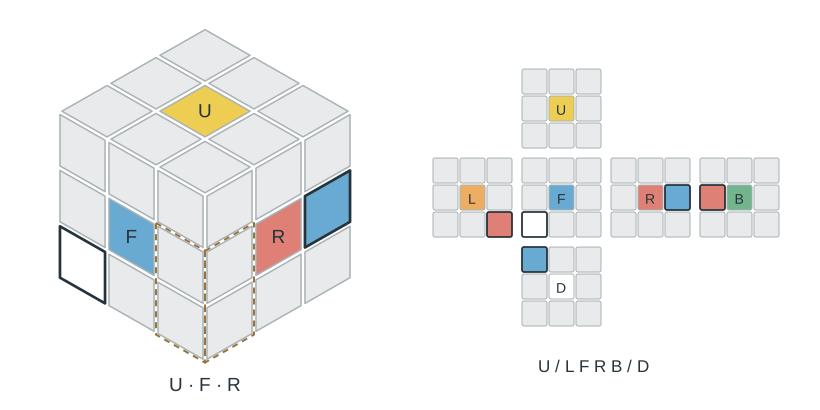
F U F2 U2 R' U R F
Mirror
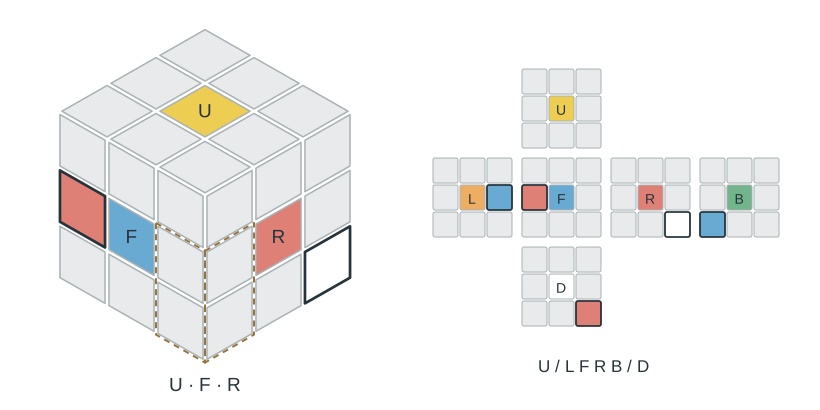
R' U' R2 U2 F U' F' R'
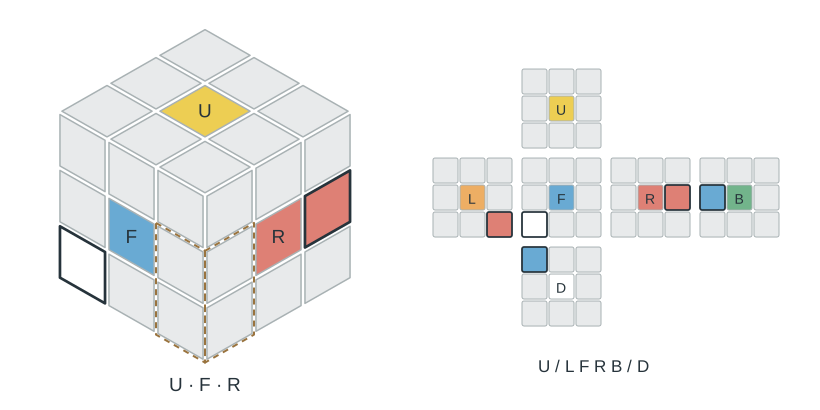
R F U2 R2 F' R'
Mirror
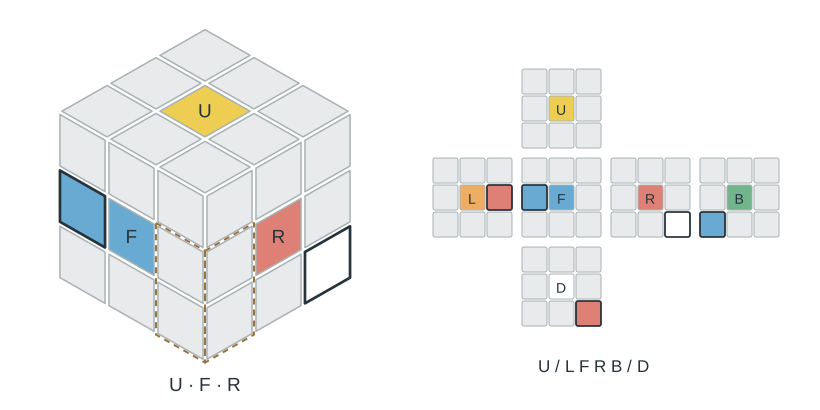
F' R' U2 F2 R F
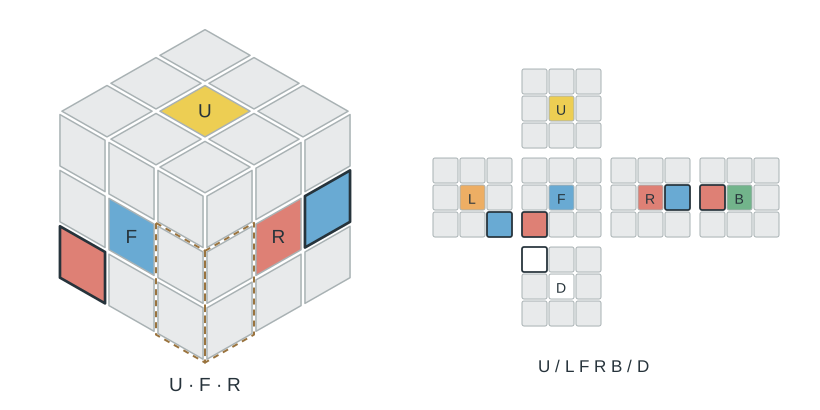
L F' L' R' F' U R F
Mirror
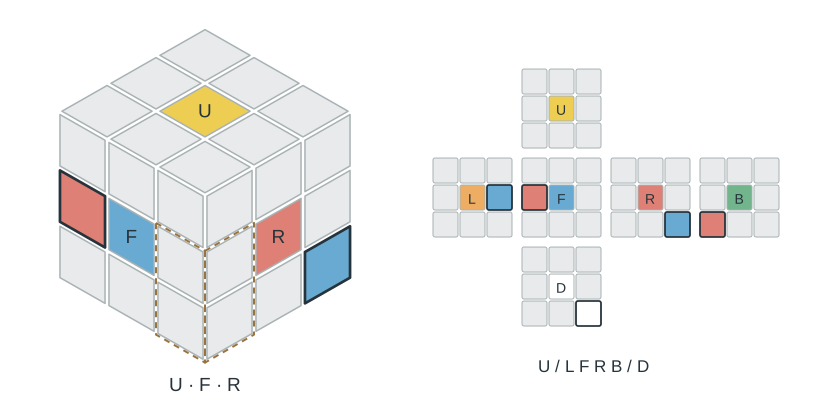
B' R B F R U' F' R'
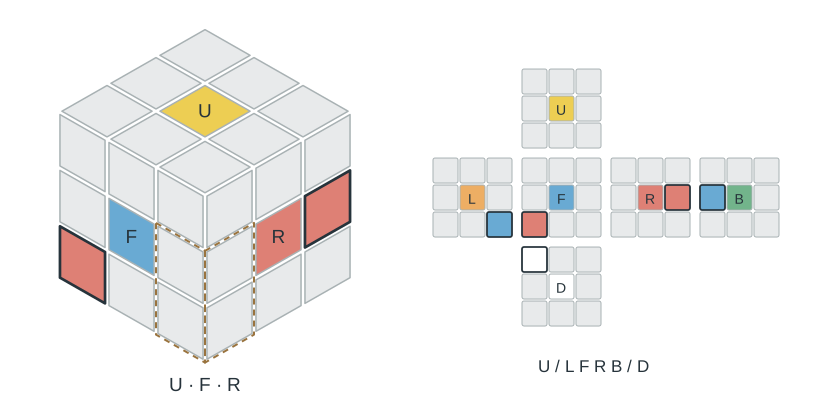
F2 R2 U R2 U' F2 R2
Mirror
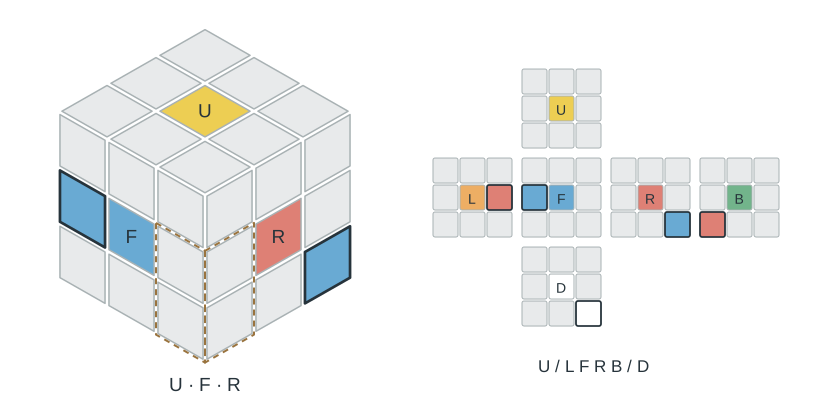
R2 F2 U' F2 U R2 F2
DFL + BL
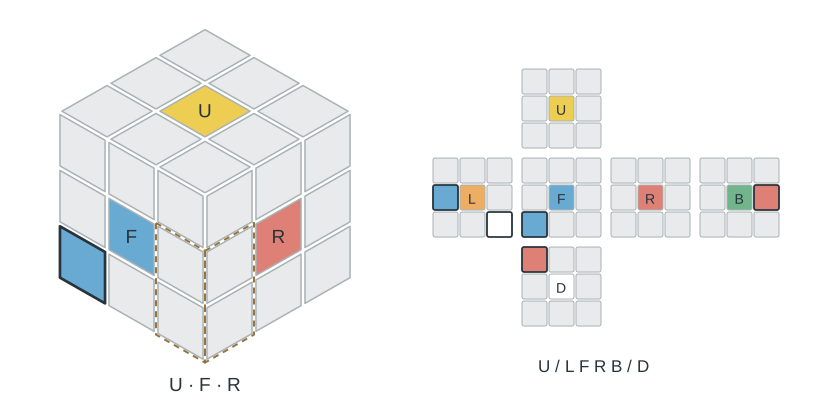
F U F2 L U' F L'
Mirror
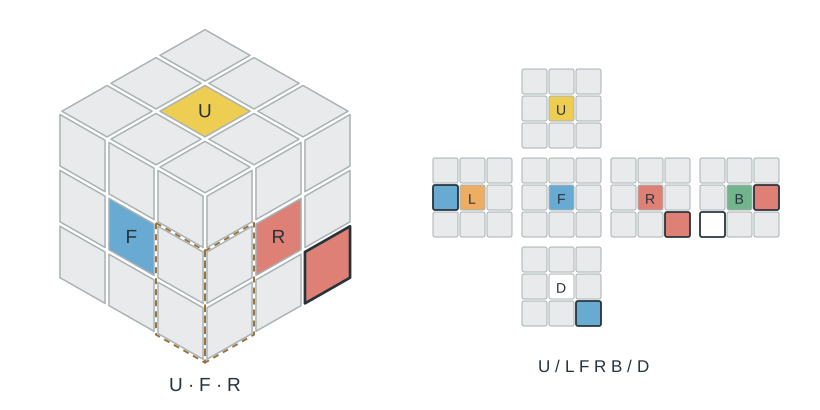
R' U' R2 B' U R' B
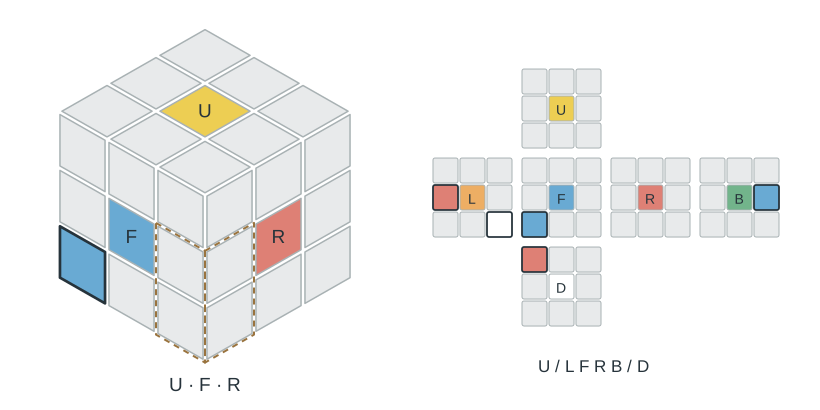
L' F L' F' L F'
Mirror
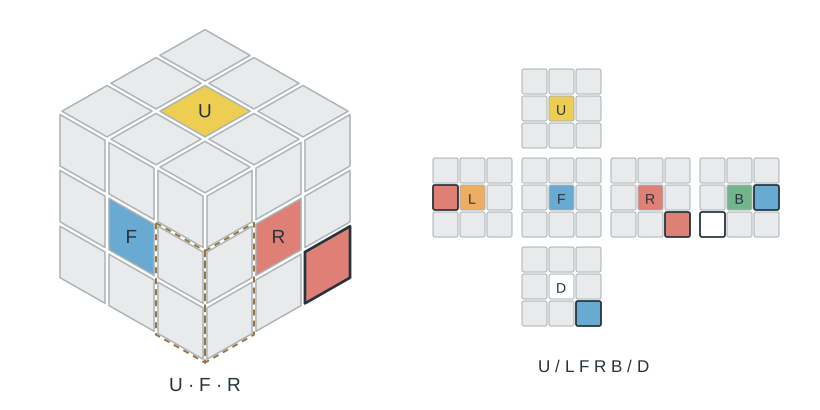
B R' B R B' R
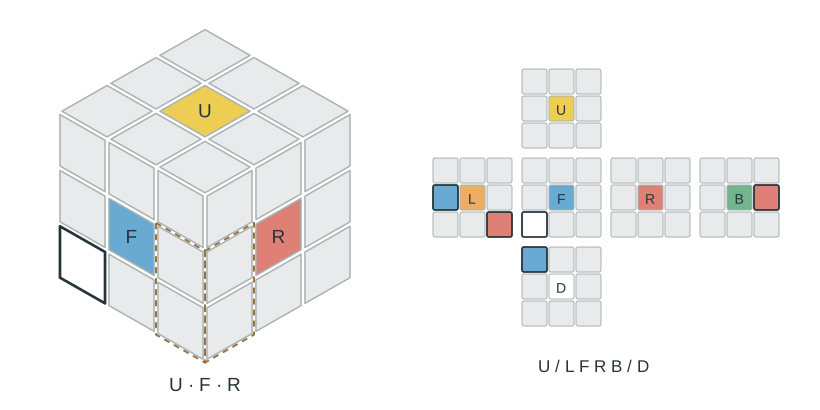
L U L2 F' L2 U2 F L
Mirror
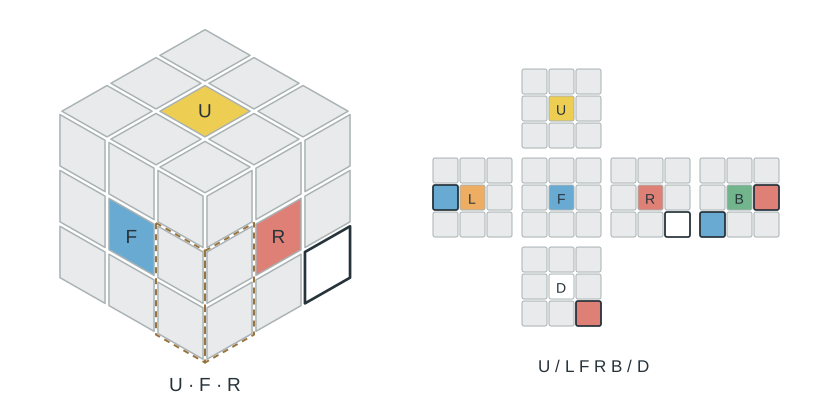
B' U' B2 R B2 U2 R' B'
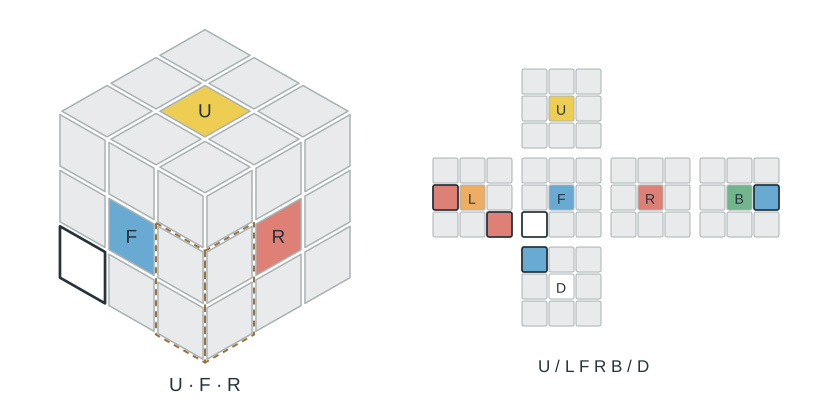
F2 L' F2 L2 F2 L F2
Mirror
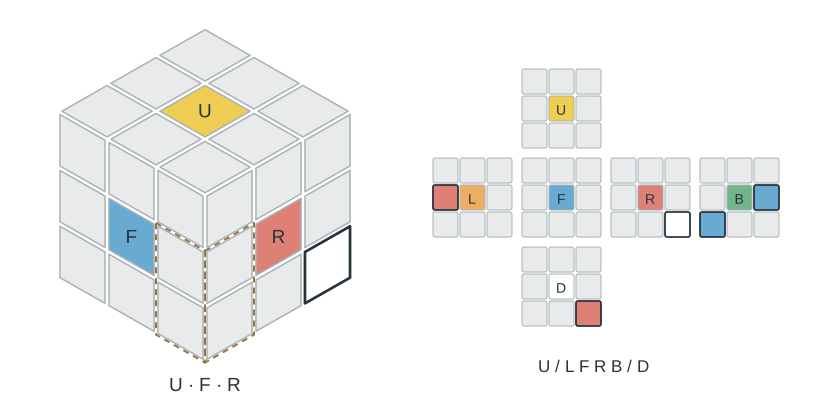
R2 B R2 B2 R2 B' R2
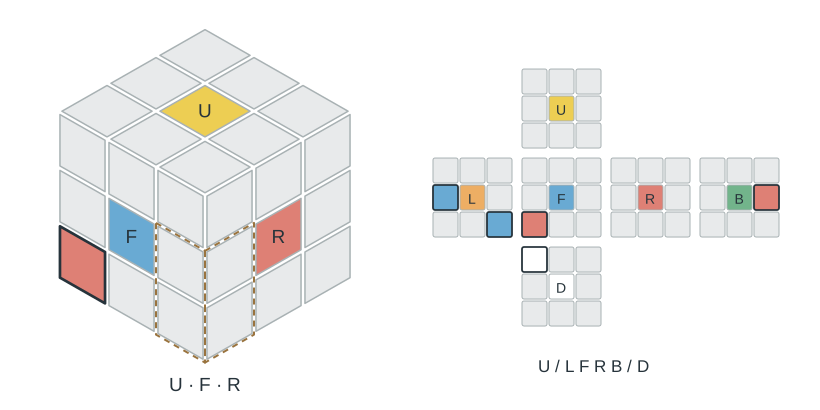
L U' F L' F L F' L'
Mirror
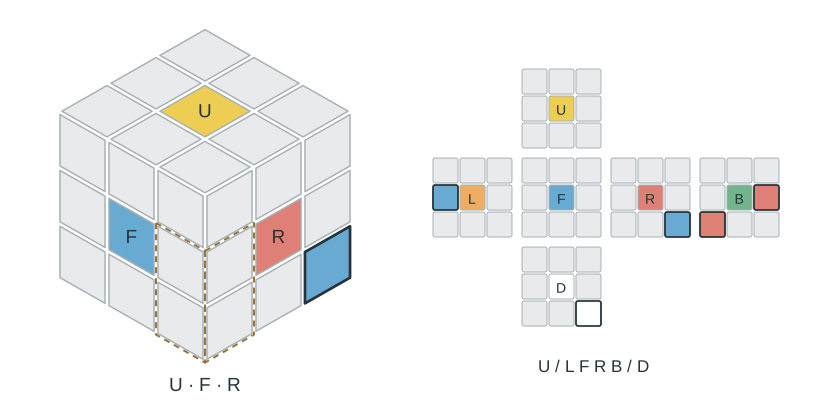
B' U R' B R' B' R B
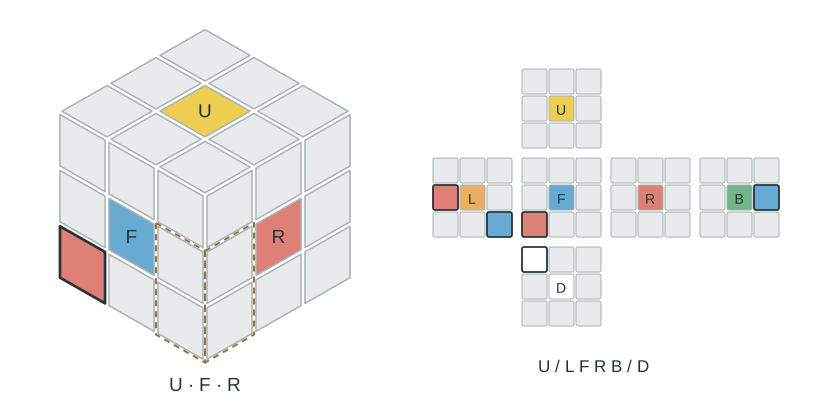
L' F' L F' L2 F2 L
Mirror
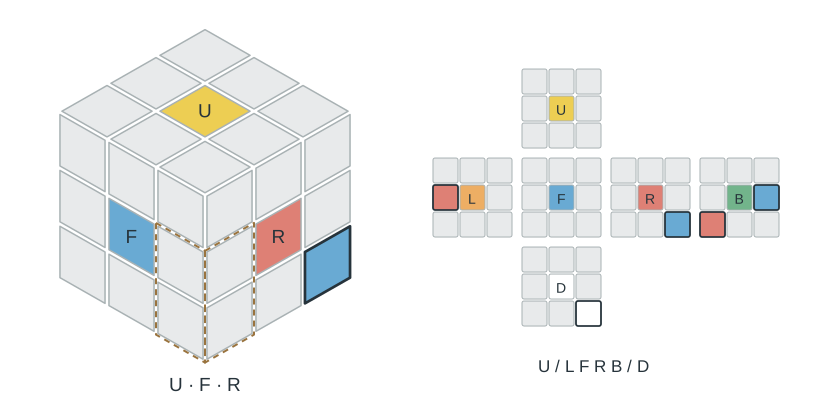
B R B' R B2 R2 B'
DBL + FL
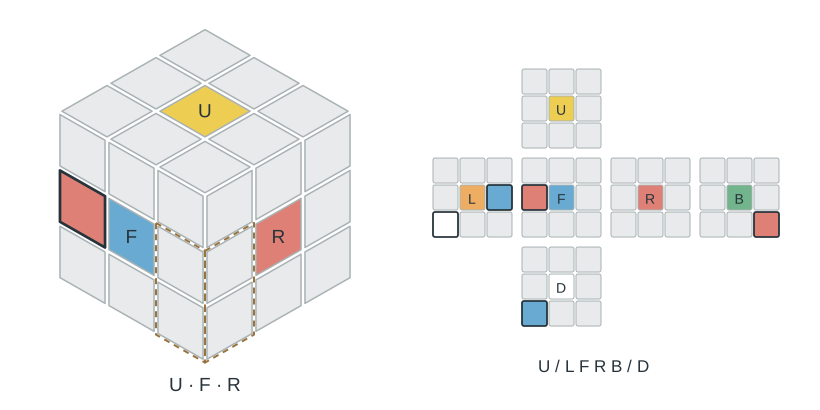
L' U L2 F' U2 F L'
Mirror
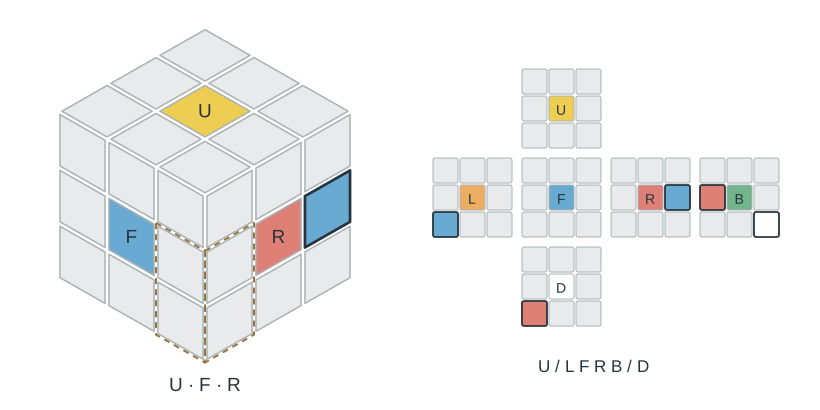
B U' B2 R U2 R' B
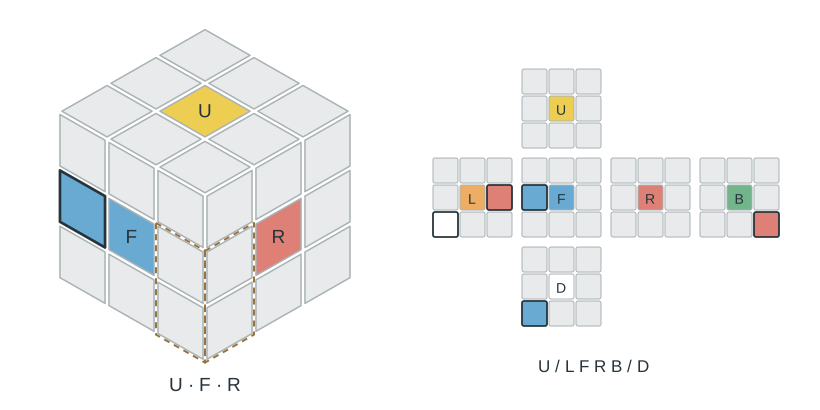
L F' U' F' L' F2
Mirror
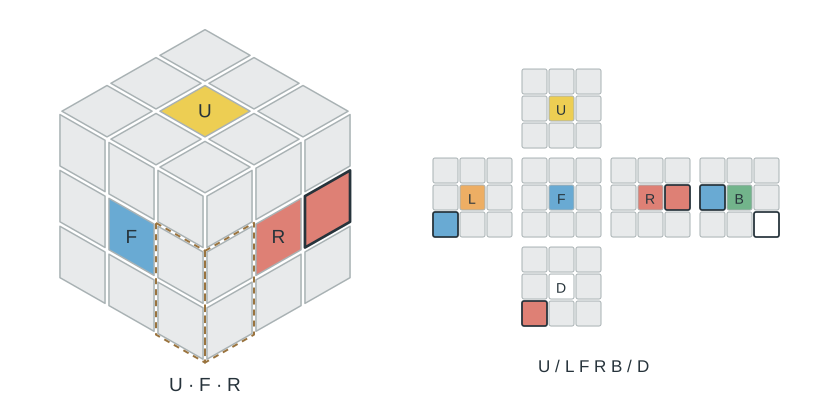
B' R U R B R2
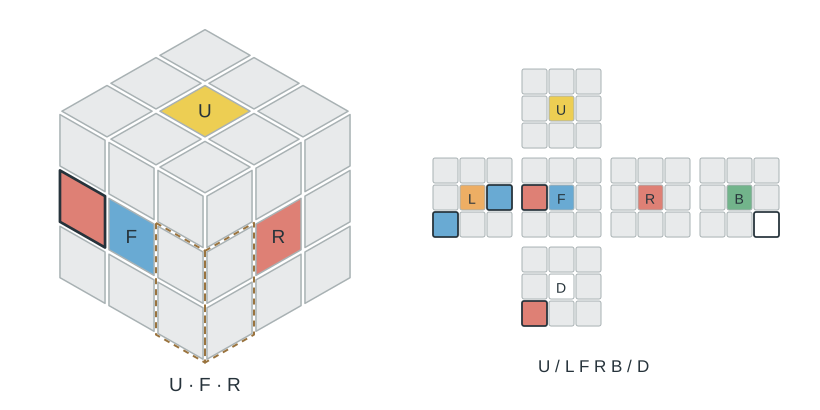
L U2 F' L2 U L U2 F
Mirror
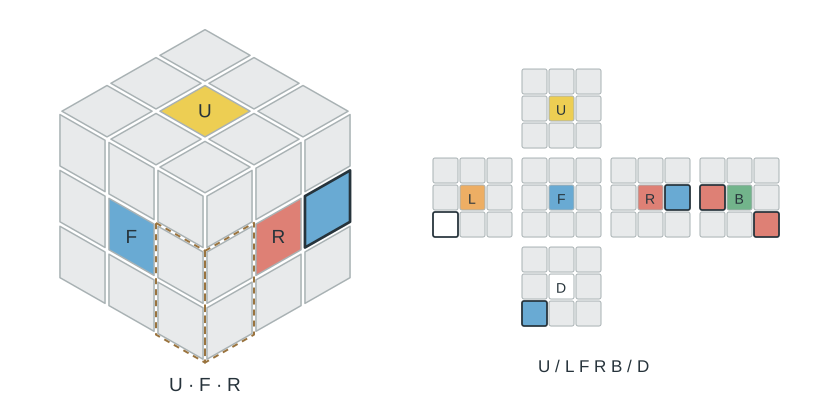
B' U2 R B2 U' B' U2 R'
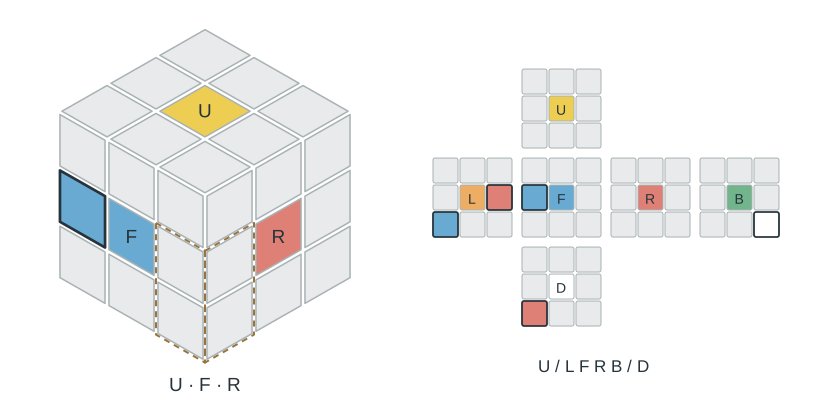
F2 L' U' F2 U F2 L
Mirror
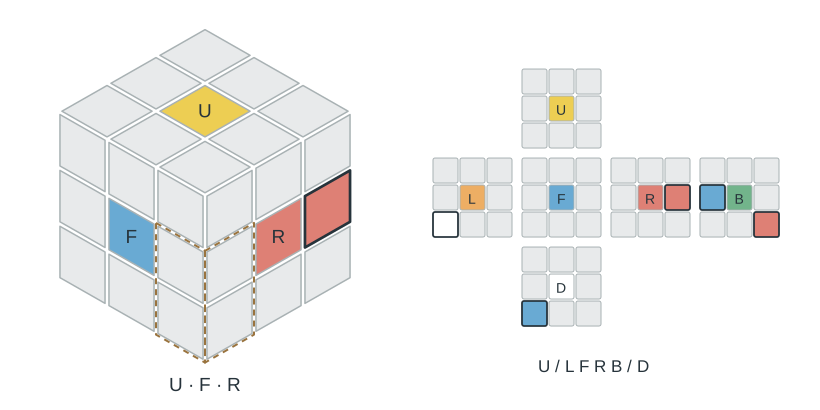
R2 B U R2 U' R2 B'
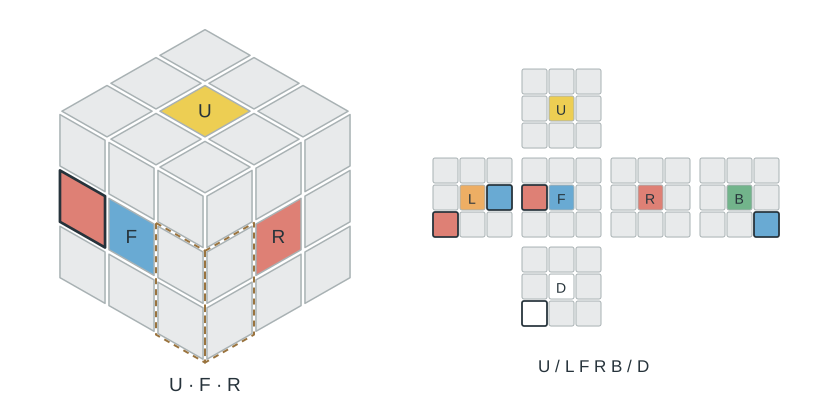
L' U L' F' L2 U2 F
Mirror
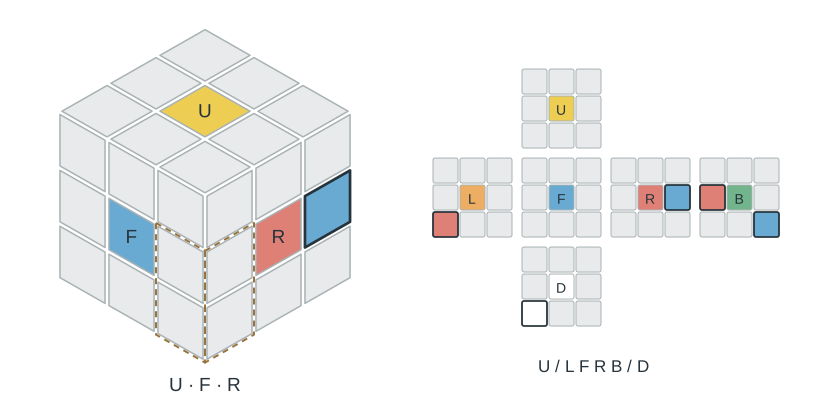
B U' B R B2 U2 R'
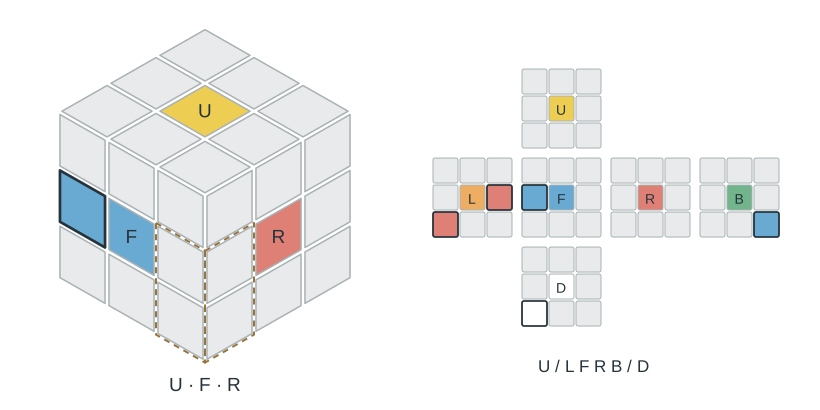
L U2 F2 L' F2
Mirror
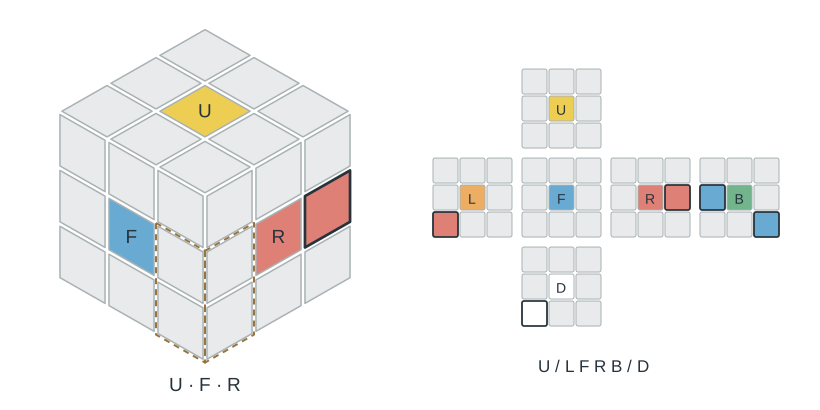
B' U2 R2 B R2
Five ideas
Classes A–F sort cases by where the pieces start. The techniques below work on how the pieces relate, so they cut across the classes and apply to standard F2L as well.
Let the extraction set up a familiar insertion
In a wrong-slot case, extraction, adjustment, and insertion are best planned together: a familiar extraction can leave the pieces exactly where the final insertion starts. Macky runs the first half of a familiar case at the wrong slot, leaving an easy top-layer case for the real slot.4 That case only needs to be familiar relative to the actual slot, so no rotation is spent matching a standard diagram.5
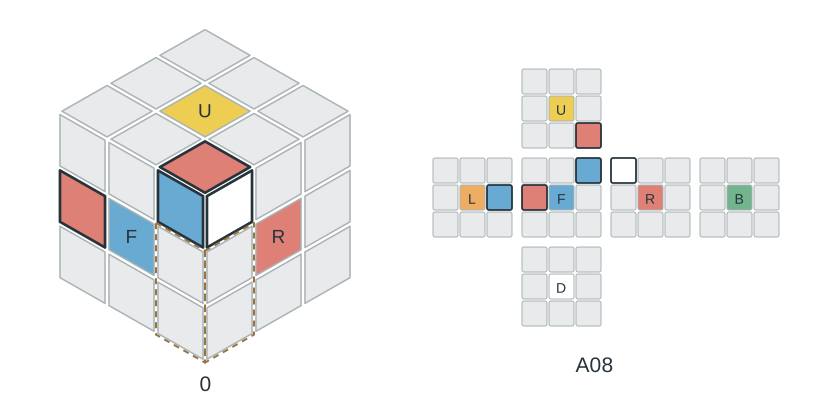
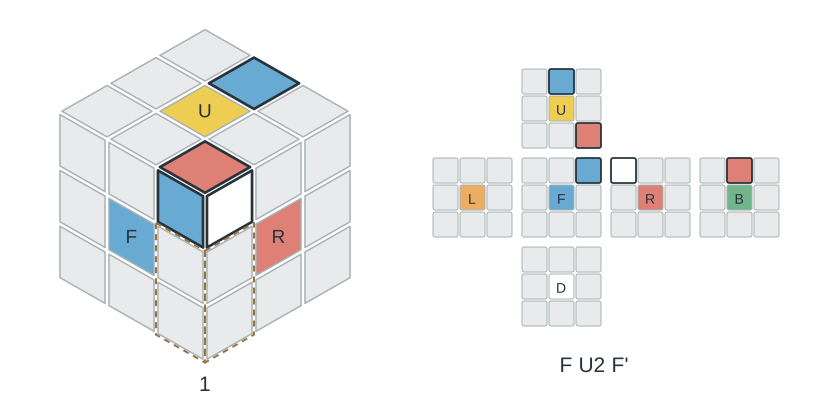
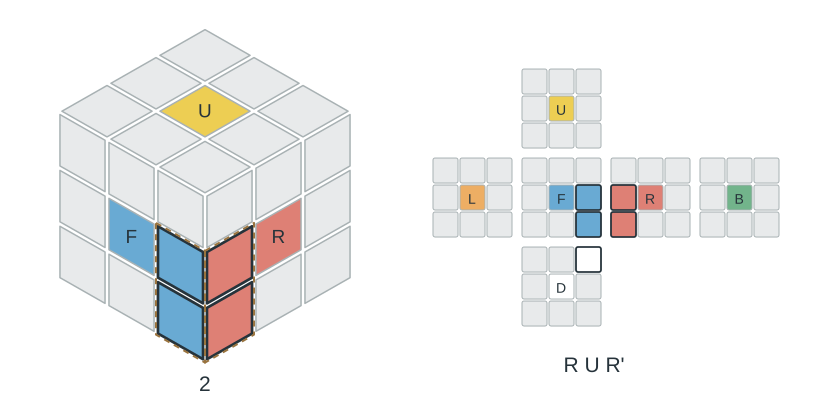
In A08, F U2 F' brings the FL edge to UB with blue up, while the corner leaves UFR and returns with white still facing right. This is the basic case: R joins the pair and U R' inserts it.
F U2 F'
R U R'
Pick the route by edge orientation
Relative to the current grip, the blue-red edge is oriented when blue faces U on top, or F or B in the middle layer. An oriented edge can be solved with R, U, and L alone.6
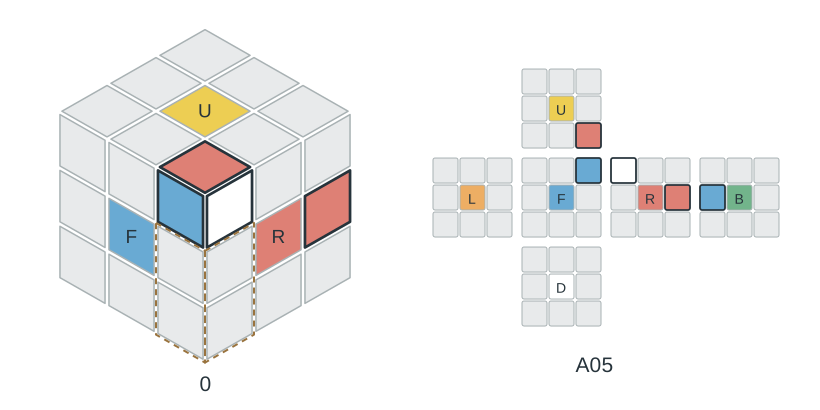
A05’s edge sits in BR with blue back, so it is oriented and (R' U' R) (R U R') stays in R and U; the two adjacent R turns merge into R2, giving R' U' R2 U R'. A08’s edge sits in FL with blue left, so it is unoriented: the F that lifts it out flips it, and U2 moves it clear of F', which leads to the same insertion.
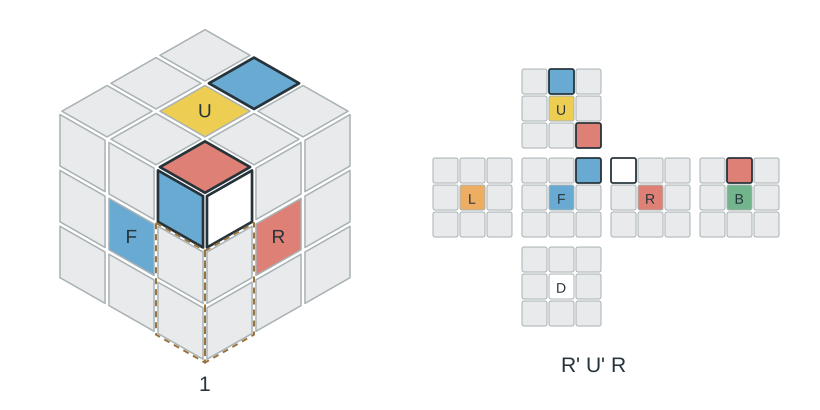
R' U' R
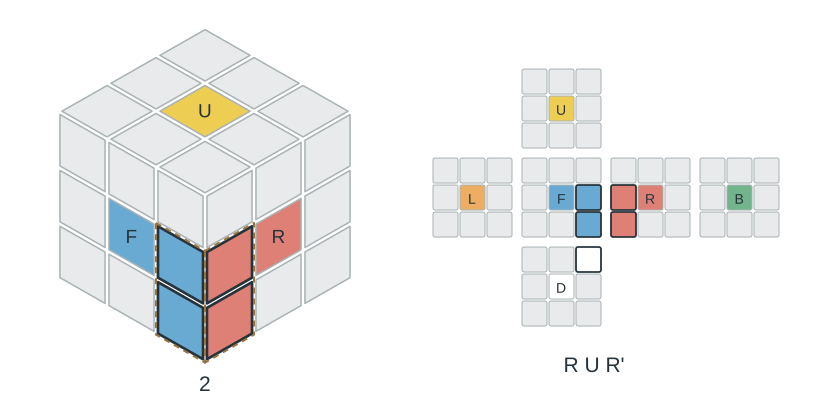
R U R'
Carry a joined pair as one block
A pair already joined in a wrong slot can move as a unit. Pranav Prabhu’s R' F U' F' R transfers a joined pair from FL directly into BR, with no cube rotation in between.7
E07 moves a joined pair from BL into FR. In R (L U2 L') R', R opens the target slot, L U2 L' carries the block to UFR and UR, and R' brings it into FR with the pair still joined.
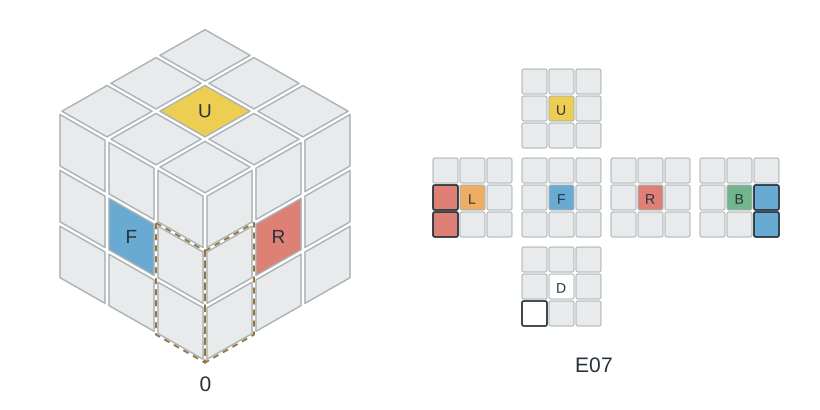
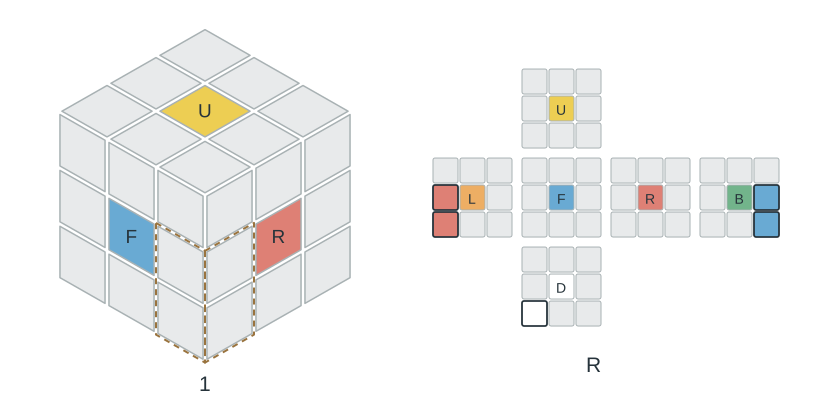
R
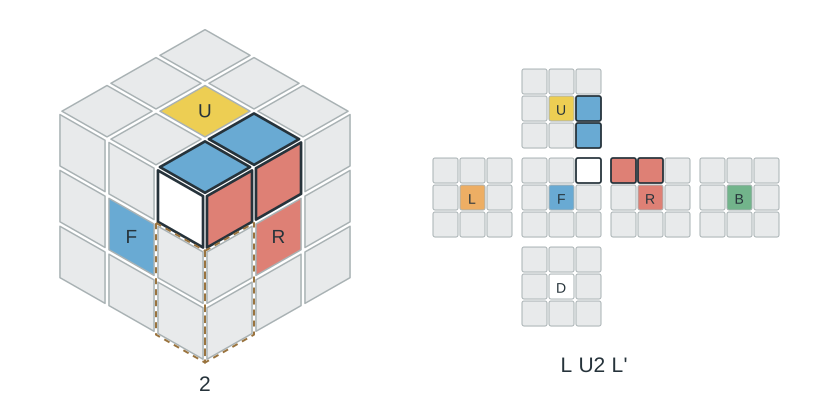
L U2 L'
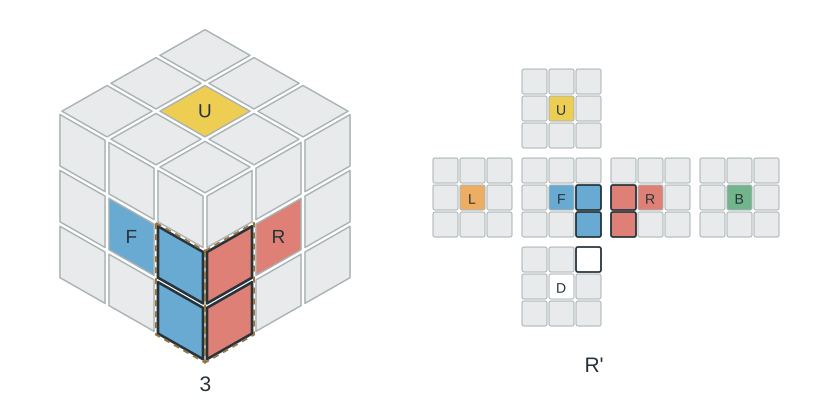
R'
Keyhole: borrow an unsolved position
Keyhole applies when one piece of the pair is already solved. D changes which bottom corner position sits under each middle edge, so an unsolved slot’s corner or edge position becomes a temporary insertion site; the missing piece goes in there and D is undone. Pseudoslotting uses the same offset across two slots: D aligns the missing corner and edge positions of two slots, a corner and an edge from different original pairs go in together, and undoing D completes both.8
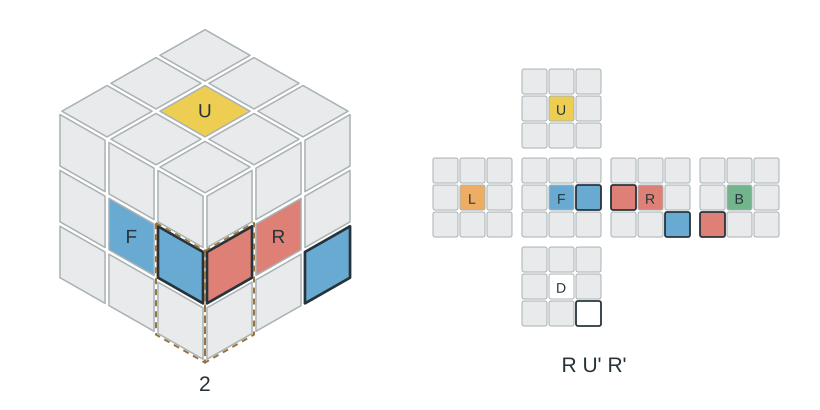
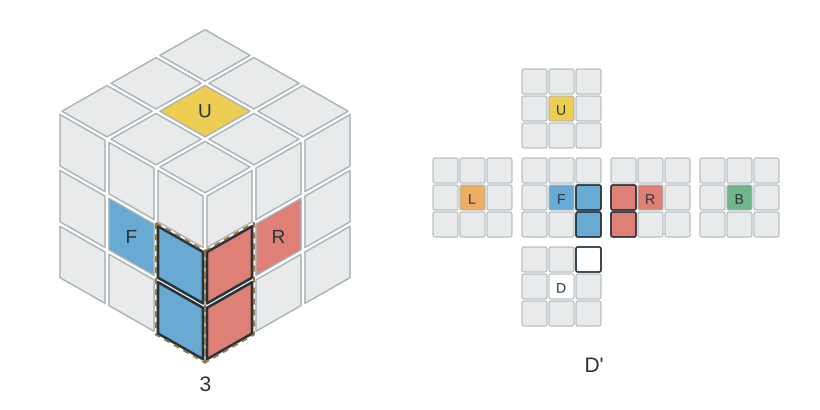
K01, a standard case, shows the solved-corner variant. The corner is solved at DFR and the edge is at UF with blue up. The FL corner, outlined in purple, must be unsolved because it temporarily takes the target corner’s place. D moves the target corner to DBR and the FL corner to DFR, R U' R' inserts the edge, and D' restores the target corner.
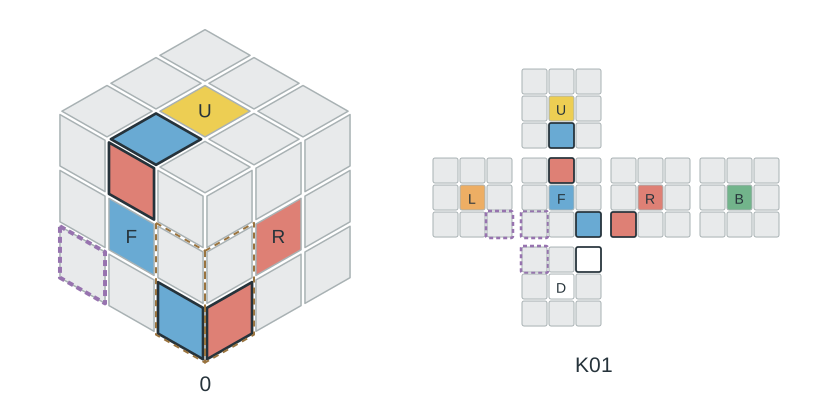
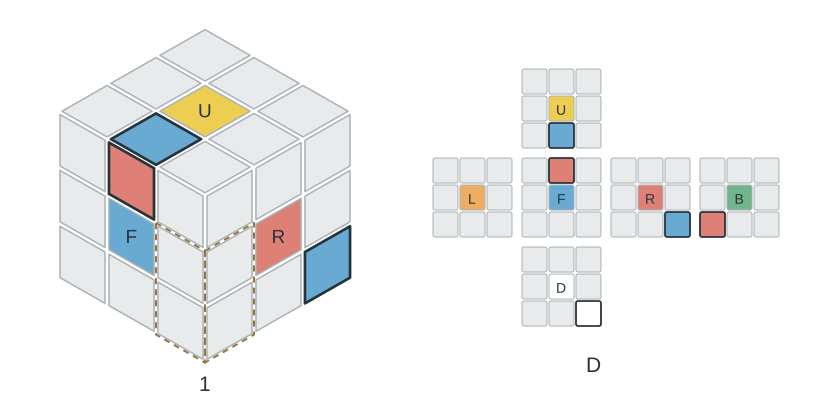
D
R U' R'
D'
Choose the current solution for the next pair
Multislotting changes how the current pair is solved so that it also pairs up or simplifies the next one. In one of Macky’s examples, both solutions start with L U L'; after that, the longer insertion U R U2 R' replaces R U' R' because it also forms the next pair.4
Empty slots usually allow several solutions. Jayden McNeill weighs rotations, which slot ends up filled, next-pair visibility, move count, and fingertricks, criteria that often conflict.9 A01 has a six-move RU route, U' R' U R2 U' R', and a five-move RF route, R F R2 F' R'; pick the one whose turn transitions and fingertricks run more smoothly in your hands.
References
-
J Perm, Advanced F2L ↗ and the algorithm sheet ↗. ↩
-
湛蓝, nonstandard F2L ↗ (Chinese). ↩
-
Macky (Cubefreak), Standard Extensions to F2L ↗. ↩ ↩2
-
SpeedCubeVault (yukirubik333), Advanced F2L ↗ (Japanese). ↩
-
J Perm, Rubik’s Cube: F2L Keyhole Technique & Pseudoslotting ↗, keyhole at 0:48 ↗, pseudoslotting at 4:40 ↗. ↩
-
Jayden McNeill, Taking advantage of empty slots ↗. ↩